How much is homeowners insurance in South Florida?
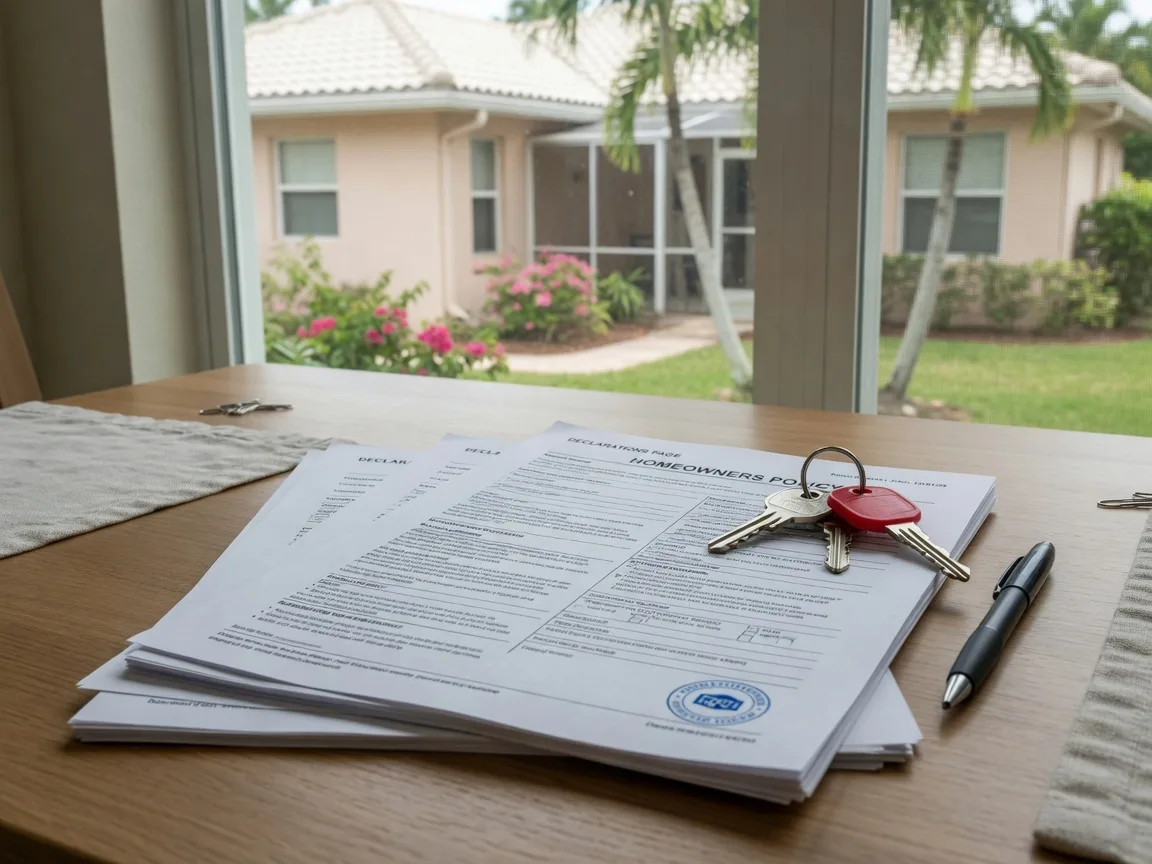
Florida has the highest homeowners insurance rates in the country, with average annual premiums of approximately $8,400 for a typical single-family home in 2026 (Insurify's 2026 projection, up from about $8,292 in 2025). Actual costs vary widely by location, home age, construction type, and coverage level, so treat this as a useful reference point rather than an exact quote for your situation. A newer home with impact windows in a less flood-prone area might pay $4,000 to $5,500 per year, while an older home near the coast could pay $10,000 or more.
Source: Insurify, 2026 Insuring the American Homeowner Report (Florida average ~$8,458 projected for end of 2026); Insurance.com 2026 state average ~$8,471; GreatFlorida ~$8,200 for a $300,000 dwelling. Updated October 20, 2026.
This topic is covered in more detail in our comprehensive guide:Homeowners Insurance in Florida — Cost Breakdown 2026
We recommend reading that version for the full breakdown with updated data and more strategies to save.
Average costs by home type and location
Here's what homeowners in South Florida are typically paying for insurance, based on home type and location:
Single-family homes: $4,000 to $9,000 per year
The wide range depends on the home's age, roof condition, construction type, and proximity to the coast. A newer home in western Boca Raton or Boynton Beach with impact windows and a hip roof might pay $2,500 to $3,500. An older home near the coast in Delray Beach or Highland Beach could pay $5,000 to $6,000 or more.
Townhomes: $3,000 to $6,000 per year
Townhome insurance typically costs less than single-family because the HOA's master policy covers the exterior structure and common areas. You need an HO-6 policy that covers the interior, personal property, and liability. Costs depend on the townhome's age, construction, and the HOA's master policy coverage.
Condos: $2,000 to $4,500 per year
Condo insurance (HO-6) is the most affordable because the association's master policy covers the building exterior and common areas. Your policy covers the interior, personal property, and liability. The cost depends on the building's age, location, and the master policy's deductible.
How homeowners insurance works in South Florida
Before we dig into costs, it helps to understand what homeowners insurance actually covers and how it works differently here in South Florida compared to the rest of the country.
What a standard policy covers
A typical homeowners insurance policy in Florida includes four main types of coverage:
Dwelling coverage - repairs or rebuilds your home's structure if it's damaged by a covered event (fire, wind, lightning, etc.)
Personal property coverage - replaces your belongings like furniture, electronics, and clothing if they're stolen or damaged
Liability coverage - protects you if someone is injured on your property or if you accidentally damage someone else's property
Additional living expenses (ALE) - covers hotel stays, meals, and other costs if you can't live in your home while it's being repaired
What it does NOT automatically cover
Flood insurance is a separate policy. Standard homeowners insurance does not cover flooding from storm surge, heavy rain, rising groundwater, or overflowing canals. If you have a federally backed mortgage and live in a FEMA-designated flood zone, flood insurance is required. Even if it's not required, it's strongly recommended for any South Florida home.
Hurricane and wind coverage
Hurricane coverage in Florida is where things get a bit more complicated than the rest of the country:
Some homeowners policies include wind and hurricane coverage as part of the standard policy
Other policies require a separate windstorm policy, especially for properties in high-risk coastal areas
Either way, hurricane damage has its own deductible structure (see the FAQ below)
The key takeaway: when you're shopping for a home or insurance in South Florida, always ask whether wind coverage is included in the standard policy or requires a separate policy. This affects both your premium and your deductible structure.
The hurricane deductible
Florida law requires a separate hurricane deductible on most homeowners policies. Unlike your regular deductible (which is a flat dollar amount like $1,000 or $2,500), the hurricane deductible is calculated as a percentage of your dwelling coverage, typically 2% to 5%.
Example: On a home with $400,000 in dwelling coverage and a 2% hurricane deductible, you would pay the first $8,000 of hurricane damage out of pocket before your insurance kicks in. With a 5% deductible, that jumps to $20,000. The tradeoff is that higher hurricane deductibles lower your annual premium.
This is a critical difference from standard homeowners insurance in most other states, where deductibles are flat dollar amounts. Understanding your hurricane deductible is essential for budgeting after a storm.
What affects your insurance premium?
Several factors determine how much you'll pay for homeowners insurance in South Florida:
Home age and condition — newer homes (built after 2002 with updated building codes) cost less to insure. Older homes with older roofs cost more
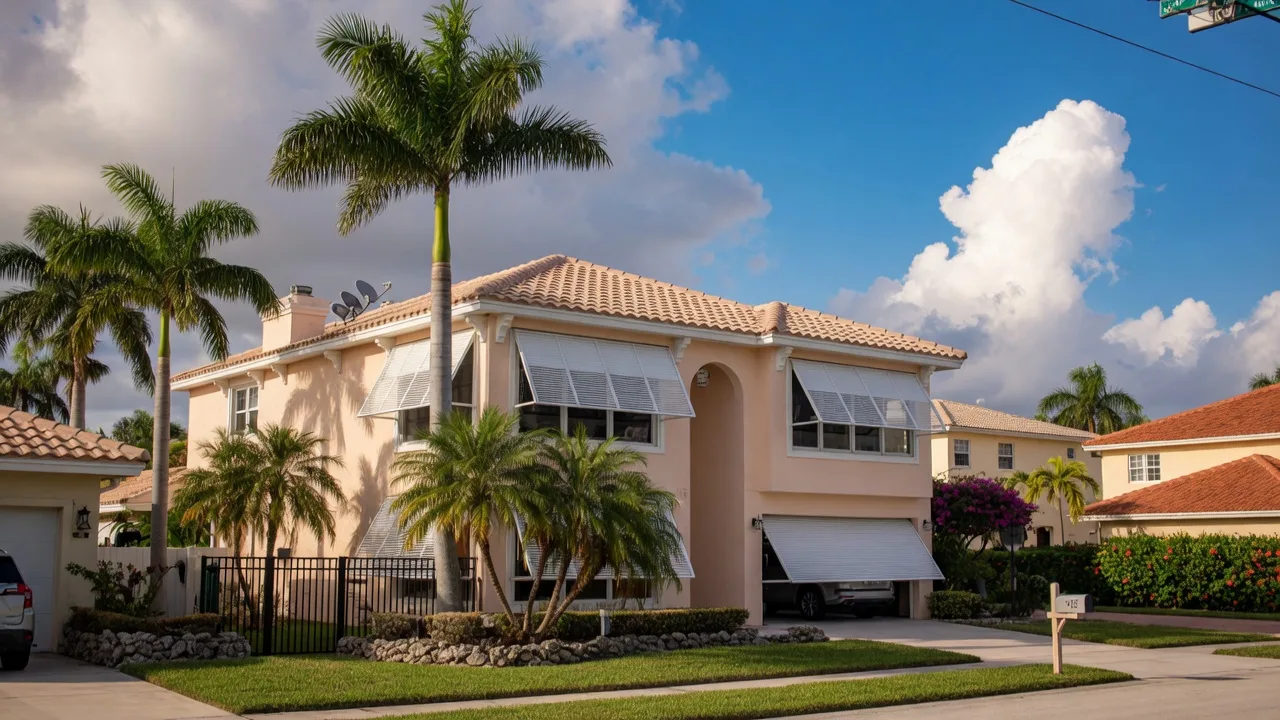
Roof age and type — a roof under 10 years old qualifies for discounts. Hip roofs (four sloped sides) are more wind-resistant than gable roofs and cost less to insure
Impact windows and shutters — homes with impact windows or approved hurricane shutters get significant discounts on wind coverage
Distance to the coast — homes closer to the coast pay higher windstorm premiums. Properties within 5 miles of the coast see the biggest rate increases
Flood zone — being in a flood zone doesn't affect your homeowners policy (flood insurance is separate), but it adds to your total insurance costs
Deductible choice — higher wind/hurricane deductibles (typically 2% to 5% of dwelling coverage) lower your premium
Credit score — in Florida, insurers can use credit-based insurance scores to set rates. Better credit usually means lower premiums
Claims history - previous claims on the property (especially water damage and roof claims) can significantly increase premiums
Why premiums vary between South Florida properties
Two homes on the same street can have very different insurance premiums. Here is why that happens and how it matters when you are shopping for a home or budgeting for ownership.
Location (distance to coast, flood zone)
Properties within 5 miles of the coast pay significantly higher windstorm premiums. Being in a flood zone adds the cost of a separate flood insurance policy. Even the specific neighborhood within a city can make a difference - western Boca Raton tends to be cheaper than east Boca near the Intracoastal.
Roof age and type
Hip roofs (four sloped sides) get better rates than gable roofs because they handle high winds better. A roof under 10 years old qualifies for discounts. A roof over 15-20 years old can significantly increase your premium or even make it hard to get coverage.
Construction year (post-2002 building codes)
Florida updated its building codes significantly after Hurricane Andrew in 1992, with major revisions in 2002. Homes built after 2002 generally have stronger construction standards and lower insurance costs. A home built in 2010 will usually cost less to insure than a home built in 1995, even if they are the same size and in the same neighborhood.
Impact windows vs. shutters
Homes with impact windows or approved hurricane shutters qualify for wind mitigation discounts. Impact windows are the most expensive upgrade but offer the best savings and convenience. Accordion shutters and storm panels also qualify but may have slightly smaller discounts.
Claims history
A property with past claims (especially water damage or roof claims) will cost more to insure. Insurers also look at the number of claims in the surrounding area. A single water claim can raise your premium by hundreds of dollars per year.
Credit score
In Florida, insurers can use credit-based insurance scores when setting rates. Better credit typically means lower premiums. This is one of the few factors you can improve before applying for coverage.
Coverage amounts and deductible choices
Higher coverage limits mean higher premiums. Choosing a higher deductible (both regular and hurricane) lowers your premium. A 5% hurricane deductible instead of 2% can save you a meaningful amount each year, though it means more out-of-pocket costs after a storm.
Insurer (Citizens vs. private carriers)
Citizens Property Insurance (the state-backed insurer of last resort) cut rates for 2026: homeowners multiperil policyholders received an average 8.8% reduction effective July 1, 2026 for new policies and at renewal for existing ones, with all personal-lines policyholders getting at least a 2% decrease (Citizens / Florida OIR, 2026). Even so, if you qualify for coverage from a private insurer, it is usually worth exploring those options first. Some private carriers specialize in newer or higher-value homes and may have competitive rates.
How to save on homeowners insurance
Here are a few of the most effective ways to lower your insurance costs in South Florida:
Get a wind mitigation inspection - this $75 to $150 inspection can save you hundreds per year by documenting your home's wind-resistant features
Bundle home and auto policies - bundling with the same company typically saves 10% to 20% on each policy
Shop around with an independent agent - rates vary dramatically between carriers, and an independent agent can quote multiple companies at once
Budget $4,000 to $9,000 per year for homeowners insurance on a single-family home in South Florida, plus $500 to $3,000 for flood insurance if you're in a flood zone. The single best way to save is to buy a newer home with impact windows and a newer roof, or to invest in those upgrades before you buy. I can help you estimate insurance costs for any home you're considering.
Frequently asked questions about homeowners insurance in South Florida
Why is homeowners insurance so expensive in Florida?
Florida has the highest homeowners insurance rates in the country due to several factors: frequent hurricanes and tropical storms, high litigation rates for insurance claims, roof replacement scams, and reinsurance costs (insurance for insurance companies). The state's unique windstorm risk means Florida homeowners pay roughly 3x the national average for coverage.
Do I need flood insurance in South Florida?
Flood insurance is required by law if your home is in a FEMA-designated flood zone and you have a federally backed mortgage. Even if you're not in a flood zone, flood insurance is recommended in South Florida. Heavy rain, storm surge, and drainage issues can cause flooding anywhere. Flood insurance costs $500 to $3,000+ per year depending on flood zone risk and coverage amount.
How can I lower my homeowners insurance in Florida?
You can lower your homeowners insurance by getting a wind mitigation inspection, installing impact windows or shutters, shopping around with multiple carriers, bundling home and auto policies, raising your deductible, choosing a higher hurricane deductible, and maintaining good credit. A wind mitigation inspection alone can save hundreds per year.
What does homeowners insurance cover in Florida?
Homeowners insurance covers dwelling (your home's structure), personal property (your belongings), liability (if someone is injured on your property), and additional living expenses (if you can't live in your home during repairs). It does NOT cover flood damage or storm surge. Those require separate flood insurance through the National Flood Insurance Program or a private carrier.
How much does homeowners insurance cost in South Florida?
The average homeowners insurance premium in Florida is about $8,400 per year in 2026 (Insurify's 2026 projection), which is roughly 2.8 times the national average. Your actual cost depends on your home's location, roof age, construction type, coverage amounts, and claims history. Homes near the coast or in high-risk flood zones typically pay more.
What is a wind mitigation inspection and do I need one?
A wind mitigation inspection evaluates your home's wind-resistant features including roof covering, roof deck attachment, roof geometry, and opening protection (windows and doors). It costs $75 to $150 and can save you $500 to $1,500 or more per year on your insurance premium. Most Florida insurers offer significant discounts for homes with favorable wind mitigation features. This is one of the most cost-effective improvements you can make to lower your insurance costs.
Does homeowners insurance cover hurricane damage in Florida?
Yes, but with a separate hurricane deductible that is typically 2-5% of your dwelling coverage, not a flat dollar amount. For example, on a $400,000 home with a 2% hurricane deductible, you would pay the first $8,000 of hurricane damage out of pocket. Standard wind damage from non-hurricane storms is covered under your regular deductible. It's important to understand your policy's hurricane deductible so there are no surprises after a storm.
How do I file a homeowners insurance claim in Florida?
Contact your insurance company as soon as possible after the damage occurs. Most policies require prompt reporting. Document all damage with photos and video before making temporary repairs. Keep receipts for any emergency repairs. Your insurer will send an adjuster to assess the damage. If your claim is denied or you disagree with the settlement, you can hire a public adjuster or file a complaint with the Florida Department of Financial Services.
Is hurricane damage covered by homeowners insurance in Florida?
Yes, homeowners insurance in Florida typically covers hurricane damage, but with a separate hurricane deductible. Wind damage from a hurricane is covered, but flood damage from storm surge requires a separate flood insurance policy. Some policies include wind and hurricane coverage as part of the standard policy, while others require a separate windstorm policy, especially in high-risk coastal areas. Always check with your insurer about how wind coverage is structured on your specific policy.
How do hurricane deductibles work in Florida?
Florida hurricane deductibles are calculated as a percentage of your dwelling coverage, not a flat dollar amount. Typical hurricane deductibles are 2% to 5% of the insured value of your home. On a $400,000 home with a 2% deductible, you pay the first $8,000 of hurricane damage out of pocket. The deductible applies only to hurricane losses, not to other types of claims. You can choose a higher hurricane deductible to lower your annual premium, but that means more out-of-pocket costs after a storm.
Is flood insurance included in homeowners insurance?
No, flood insurance is not included in standard homeowners insurance. You need a separate flood insurance policy to cover damage from flooding, storm surge, rising groundwater, or overflowing canals. Flood insurance is available through the National Flood Insurance Program (NFIP) or private insurers. If you have a federally backed mortgage and live in a FEMA-designated flood zone, flood insurance is required. Even if it's not required, it's strongly recommended for any South Florida home.
Why can two similar South Florida homes have very different insurance premiums?
Two similar-looking homes can have very different premiums due to factors like roof age and type (hip roofs cost less), construction year (post-2002 building codes mean lower rates), distance to the coast, flood zone designation, impact windows or shutters, claims history on the property, credit score of the policyholder, coverage amounts, deductible choices, and whether the insurer is a private carrier or Citizens. That is why it pays to shop around and compare quotes from multiple insurers.
Want help estimating insurance costs for a specific home?
I can help you estimate what you'll pay for insurance on any home you're considering. I'll also connect you with an independent insurance agent who can quote multiple carriers.