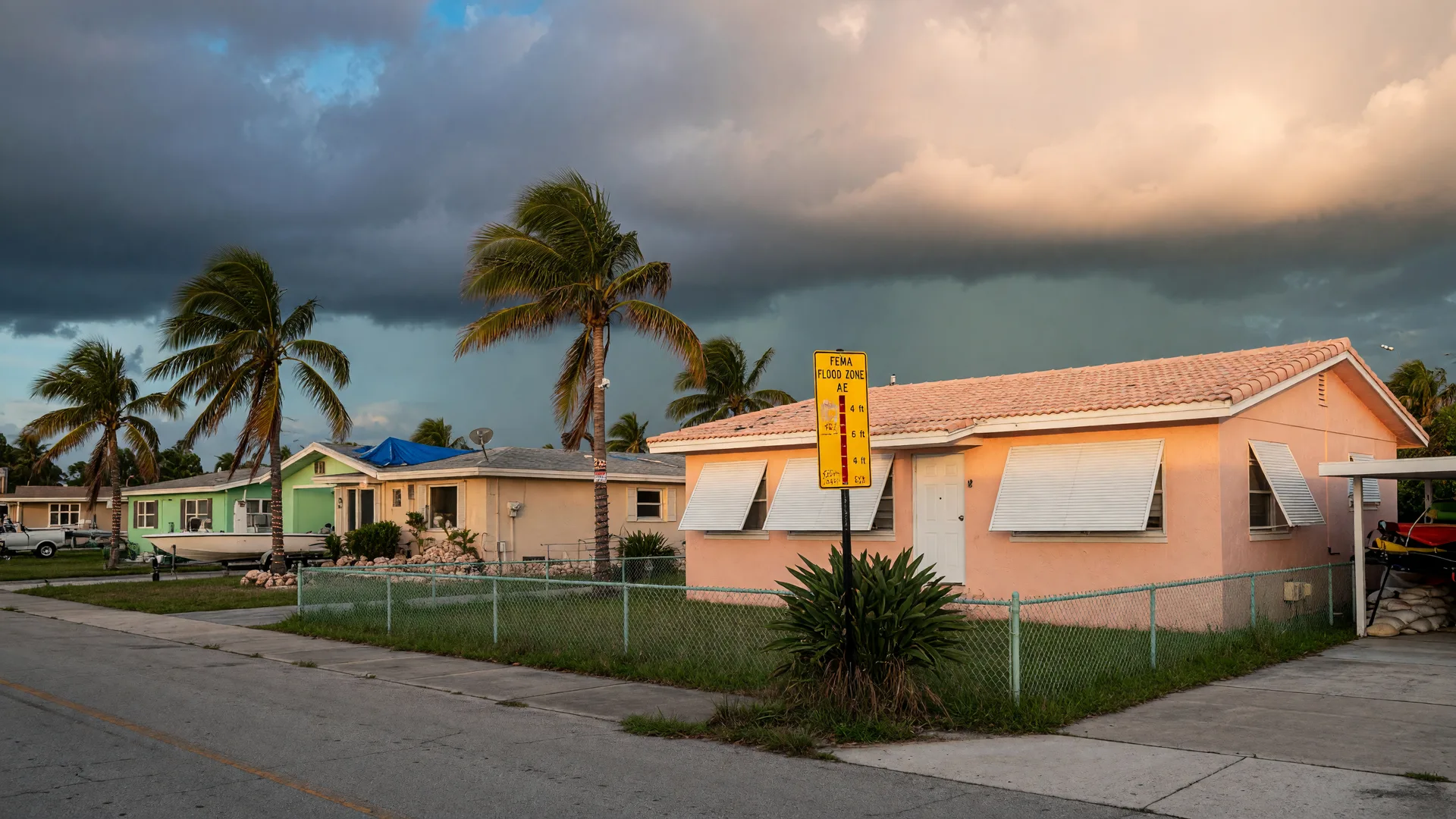
Flood Insurance in South Florida: What You Need to Know in 2026
Here is something most buyers do not realize: standard homeowners insurance does NOT cover flood damage.
In South Florida, where flooding is a real risk, this is a critical gap that can cost you tens of thousands of dollars.
This guide covers everything you need to know about flood insurance, from how it works to what it costs and how to get covered.
Buying without flood insurance to save money can backfire badly when the first storm hits. Here is what you need to know.
Flood insurance is one of the most misunderstood aspects of buying a home in Florida. Most people assume their standard homeowners policy covers flood damage. It does not. Whether you are buying your first home, relocating to South Florida, or upgrading to a coastal property, understanding flood insurance is essential to protecting your investment.
Why You Probably Need Flood Insurance
South Florida's flood zones are more extensive than most people realize. Even if you are not in a high-risk FEMA flood zone, heavy rainfall, storm surge, drainage backups, and rising groundwater can cause flooding anywhere. Here is why flood insurance matters for every South Florida homeowner:
FEMA flood maps do not always reflect current risk — Many maps are years out of date and do not account for recent development, changing weather patterns, or sea level rise
Even properties outside high-risk zones can flood — About 25% of all flood insurance claims come from moderate- to low-risk areas
Climate change is increasing flood frequency — South Florida is seeing more intense rainfall events and higher storm surges than in previous decades
Storm surge from tropical storms — Even a weak tropical storm can push enough water into neighborhoods miles from the coast to cause significant damage
Ryan says: "I recommend flood insurance for every South Florida homeowner, regardless of flood zone. The cost of a policy is small compared to the cost of flood damage — and the peace of mind is worth every penny."
How Flood Insurance Works
Flood insurance is sold separately from your standard homeowners policy. There are two main sources: the government-backed National Flood Insurance Program (NFIP) and private insurance companies. Here is how they work:
What flood insurance covers
Structural damage — Foundation, walls, floors, electrical and plumbing systems, HVAC equipment, and built-in appliances
Personal property — Furniture, clothing, electronics, and other belongings (up to policy limits)
Cleanup costs — Debris removal, water extraction, drying, and mold remediation directly caused by the flood
What flood insurance does NOT cover
Vehicles — Car damage from flooding is covered by your auto insurance's comprehensive policy
Outdoor property — Landscaping, decks, patios, fences, pools, and detached structures like sheds
Temporary living expenses — NFIP policies do not cover additional living costs if you cannot stay in your home during repairs
Basement contents — Finished basement items and improvements have limited coverage under NFIP
Moisture or mold damage — Only covered if it is a direct result of the flood and you took reasonable steps to prevent it
One important detail most buyers miss: there is a waiting period for flood insurance to take effect. NFIP policies have a standard 30-day waiting period from the date of purchase. Private insurers vary, but most also have a waiting period of 14 to 30 days. This means you cannot buy flood insurance the day before a storm is forecast and expect to be covered.
How Much Does Flood Insurance Cost?
Flood insurance costs vary widely depending on your flood zone, home elevation, building age, and coverage amount. Here are typical annual costs for South Florida homes:
Flood Zone
Typical Annual Cost
Risk Level
A, AE, V, VE (high risk)
$2,000 to $5,000+ per year
High — 1% annual flood chance
X shaded (moderate risk)
$500 to $1,500 per year
Moderate — 0.2% annual flood chance
X unshaded (low risk)
$300 to $700 per year
Low — minimal flood chance
Note: These are estimates. Actual costs depend on your property's specific elevation, building characteristics, and the insurer you choose.
What determines your flood insurance rate
Flood zone — Higher-risk zones mean higher premiums
Elevation — Homes built above the base flood elevation (BFE) get lower rates. An elevation certificate proves your home's height relative to flood levels
Building age — Newer homes built to current flood code standards are cheaper to insure
Coverage amount — Higher coverage limits mean higher premiums
Deductible choice — Choosing a higher deductible lowers your annual premium
For context, the average NFIP premium in Florida runs around $900 to $950 per year (based on policy data from August 2025 through August 2026), and South Florida properties carry the state's highest rates: inland Palm Beach County properties commonly average $1,300 to $2,000 per year, while coastal properties average $2,000 to $3,500 or more depending on flood zone and elevation. Private carriers often beat NFIP rates by 20% to 40%, especially in lower-risk zones.
NFIP vs. Private Flood Insurance
You have two options when buying flood insurance. Each has its pros and cons. Here is how they compare:
NFIP (Government-backed)
Available to every homeowner regardless of location
Fixed rates based on flood zone (no risk-based pricing surprises)
Coverage limits: $250K building, $100K contents
Slower claims process compared to private insurers
No coverage for additional living expenses
Private Insurance
Often 20-40% cheaper than NFIP for the same coverage
Higher coverage limits (up to $1M+ building, $500K+ contents)
Faster claims processing and more flexible underwriting
May cover additional living expenses
Can be non-renewed after a claim (NFIP cannot)
Many homeowners choose to get quotes from both NFIP and private carriers. In some cases, private insurance is significantly cheaper. In others — especially in high-risk coastal zones — NFIP may be the only option or the more stable choice.
Flood Zones Explained
FEMA divides properties into flood zones based on flood risk. Here is what each zone means for you:
Zone A and AE — High Risk
These are areas with a 1% annual chance of flooding (the "100-year floodplain"). AE zones have detailed flood elevation data; A zones do not. Most properties in coastal South Florida, especially near the Intracoastal Waterway and inland canals, fall into these zones. Lenders require flood insurance here.
Zone V and VE — High Risk Coastal
These zones are along the open coast and are subject to wave action in addition to flooding. Properties in V and VE zones — like parts of Highland Beach, Gulf Stream, and coastal Lighthouse Point — face the highest flood insurance costs. Building codes here require elevated construction.
Zone X Shaded — Moderate Risk
These areas have a 0.2% annual chance of flooding (the "500-year floodplain"). Many properties in western Boca Raton, Boynton Beach, and Delray Beach fall into shaded X zones. Flood insurance is not required by lenders, but it is still recommended.
Zone X Unshaded — Low Risk
These are areas with minimal flood risk. However, flooding can still happen from heavy rainfall, drainage issues, or unexpected storm events. About one in four flood insurance claims comes from low-risk X zones.
Ryan says: "Do not assume you are safe just because you are not in a high-risk flood zone. Heavy afternoon thunderstorms can overwhelm drainage even in lower-risk areas, and homeowners without flood insurance are left paying out of pocket. Check the flood map for the specific property, and ask your insurance agent what a policy would cost before you decide."
How to Get Flood Insurance
Getting flood insurance is straightforward, but there are a few steps you should take to make sure you get the right coverage at the best price:
Contact your insurance agent — Your current homeowners insurance agent can quote both NFIP and private flood policies
Get quotes from both NFIP and private carriers — Compare at least one NFIP quote and one private quote to see which works better for your situation
Check FEMA flood maps for your property — Visit the FEMA Flood Map Service Center to see your property's official flood zone designation
Consider an elevation certificate — If your home is higher than the base flood elevation, an elevation certificate (usually $200 to $500 from a surveyor) can significantly lower your premium
Check for grandfathered rates — If you are buying an existing home, the current owner may have a lower grandfathered NFIP rate that could transfer to you
Before you make an offer on a home, I can help you check the flood zone and estimate insurance costs. Flood zone information is available in the seller's disclosure and through county flood maps.
Ryan says: "I help buyers understand flood risk before they make an offer. Knowing the flood zone and what insurance will cost is part of my buyer consultation. It is one of those details that can save you thousands."
What Buyers Should Know
If you are buying a home in South Florida, here are the key things to understand about flood insurance:
Flood insurance is separate from homeowners insurance — You need two policies: one for fire, wind, and liability (HO-3, HO-6) and one for flood
Lenders require flood insurance in high-risk zones — If your home is in an A, AE, V, or VE zone and you have a federally backed mortgage, flood insurance is mandatory
Even if not required, it is strongly recommended — For the cost of a few hundred dollars a year in low-risk zones, you protect your home from catastrophic damage
Flood insurance can be transferable — If you are buying a home with an existing NFIP policy, you may be able to take over that policy at a lower rate than buying a new one
Check the flood zone before you make an offer — The flood zone affects both your insurance costs and your peace of mind. Know what you are getting into
Ryan says: "Before you buy, I always check the flood zone and insurance costs. It is part of my due diligence for every buyer I work with. No surprises, no regrets."
Related Resources
For more detailed information on homeowners insurance and homeownership costs in South Florida, check out these guides:
Flood insurance is not optional if you want to fully protect your South Florida home. Whether you are in a high-risk zone or not, the cost of a policy is small compared to the cost of flood damage. Budget $300 to $5,000+ per year depending on your flood zone, and work with an agent who can quote both NFIP and private options. I help every buyer I work with understand their flood risk and insurance costs before they make an offer.
Financing guidance
Ryan Parker · Coldwell Banker Realty
Need help understanding how insurance and other costs fit into your mortgage and overall homeownership budget? Ryan can connect you with a local lending professional who will run the numbers with you and find a loan program that fits your situation.
I check flood zones and estimate insurance costs for every buyer I work with. No surprises, no pressure. Just honest guidance so you can buy with confidence.