August 3, 2026 · By Ryan Parker · Updated October 13, 2026
How to Lower Your Homeowners Insurance in South Florida: 10 Proven Strategies
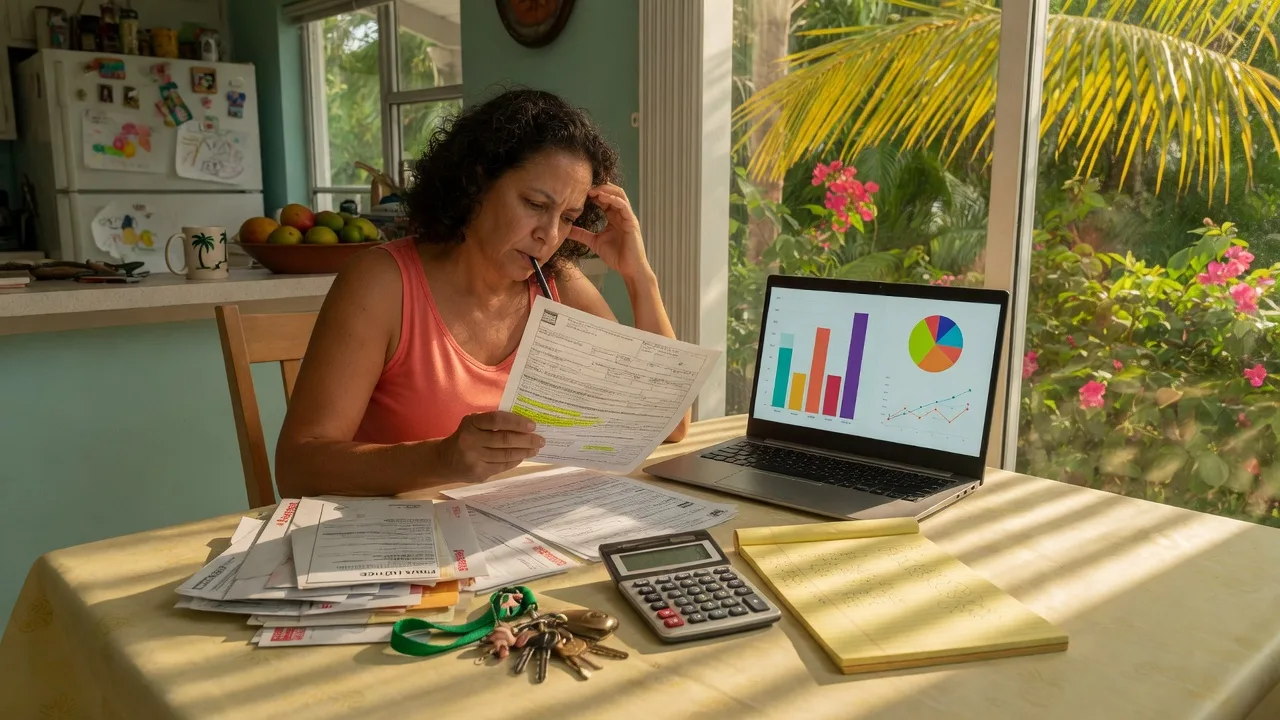
South Florida homeowners pay some of the highest insurance rates in the country. The average annual premium in Florida is about $8,400 in 2026 (Insurify's 2026 projection) — roughly 2.8 times the national average. If you live near the coast, have an older roof, or own a home built before the latest building codes, your rate could be even higher.
The good news is you don't have to just accept whatever premium you're quoted. There are real, proven strategies to lower your bill without sacrificing the coverage you need. Some of them cost a little money upfront. Many others cost nothing at all. Here are 10 proven strategies.
1 Get a Wind Mitigation Inspection
A wind mitigation inspection is the single most effective thing you can do to lower your insurance premium. An inspector evaluates your home's resistance to wind damage from hurricanes and tropical storms — specifically your roof-to-wall connections, roof deck attachment, roof covering material, roof geometry, and opening protection (windows and doors).
- • Cost: $75–$150
- • Potential savings: $500–$1,500+ per year
- • Best discounts: Hip roofs (sloped on all four sides) score better than gable roofs. Impact windows or approved shutters deliver the biggest wind mitigation credits.
- • Where to get one: Many insurance agents offer referrals to certified wind mitigation inspectors, or you can search the Florida DBPR database for licensed inspectors.
The inspection itself takes about 30–60 minutes. You get a form (OIR-B1-1802) that your insurance company uses to apply the credits. In many cases, the savings from the first year alone more than cover the cost of the inspection. For a full overview of how Florida insurance works, start with my homeowners insurance crash course.
2 Get a 4-Point Inspection
A 4-point inspection looks at the four major systems that insurers care about: roof, electrical, plumbing, and HVAC. If these systems are newer and in good condition, insurers see your home as lower risk and offer better rates. Many Florida insurance companies now require a 4-point inspection for homes older than 20 years before they'll even issue a policy.
- • Cost: $100–$200
- • Potential savings: Varies, but a newer roof and updated electrical can unlock significantly better rates
- • Tip: If your roof is over 15 years old, start saving for a replacement now — it's the biggest factor in your premium
This inspection is often bundled with a wind mitigation report. Ask your inspector if they offer both for a single visit. Learn more about what drives Florida rates in our breakdown of why Florida insurance costs are so high.
3 Shop Around Aggressively
Insurance rates can vary by hundreds of dollars, sometimes 50% or more, between carriers for the same home with identical coverage. The key is to shop — and not just once. Get at least 3–5 quotes from different carriers every time your policy comes up for renewal.
Some major carriers active in South Florida include:
- • Citizens — Florida's state-run insurer of last resort
- • Universal Insurance — one of the state's largest private carriers
- • Federated National — competitive on newer homes
- • Heritage Insurance — popular in coastal areas
- • Slide — newer carrier with competitive pricing
- • TypTap — technology-focused quoting platform
The easiest way to do this is through an independent insurance agent. Unlike a captive agent who only works for one company, an independent agent can quote you from multiple carriers at once. They do the legwork for you and present the best options. It costs you nothing extra — they get paid by the carrier you choose.
4 Increase Your Deductible
One of the simplest ways to lower your premium is to raise your deductible. In Florida, you usually have a separate hurricane deductible (often a percentage of your dwelling coverage — commonly 2%, 5%, or 10%) plus a standard all-other-perils deductible (a flat dollar amount like $1,000 or $2,500).
- • Going from a $1,000 to $2,500 all-other-perils deductible typically saves 10–20%
- • Going from $1,000 to $5,000 saves even more
- • For hurricane deductibles, going from 2% to 5% can reduce your wind premium by 20–30%
The catch: make sure you actually have the cash to cover the higher deductible. A 5% hurricane deductible on a $350,000 home means you'd pay the first $17,500 of hurricane damage out of pocket. If you don't have that in savings, a lower deductible is the safer bet.
5 Bundle Your Policies
Bundling your homeowners insurance with your auto insurance (and sometimes flood or umbrella policies) is one of the easiest discounts to get. Most major carriers offer 5–15% savings on both policies when you bundle. Some carriers also offer additional discounts for bundling wind, flood, and homeowners together under one roof.
The key here is to get quotes both ways — bundled and separate — because bundling isn't always the cheapest option. Sometimes a standalone wind policy from one carrier plus a homeowners policy from another comes out cheaper than one company doing everything. Run the numbers both ways before you decide.
6 Consider Citizens Carefully
Citizens Property Insurance is Florida's state-run insurer of last resort. If you can't find private coverage at a rate within a certain threshold, Citizens will offer you a policy. It's often cheaper than private insurance, which makes it tempting.
But Citizens comes with trade-offs:
- • Limited coverage options — fewer add-ons and less flexibility than private carriers
- • Assessment risk — if a major hurricane causes Citizens to run out of money, it can assess all policyholders to cover the gap. These assessments can add up to thousands of dollars per policy
- • Long-term uncertainty — Citizens is designed to be a safety net, not a permanent solution. The state actively works to move people into private coverage when possible
Citizens makes sense as a temporary solution or when private rates are truly unaffordable. But get quotes from private carriers too, and understand the assessment risk before you commit. For a deeper dive into how Florida's insurance market got here, read why Florida insurance costs are so high.
7 Upgrade Your Roof
Roof age is one of the biggest factors in your insurance premium. Homes with roofs under 10 years old get the best rates. As a roof ages past 15 years, insurers get nervous — and they charge accordingly. In some cases, insurers won't write a new policy on a home with a roof over 20 years old.
- • A new roof can reduce your premium by 20–40%
- • Impact-resistant shingles (Class 4 rated) get additional discounts in most carriers
- • Roofs with secondary water resistance (a peel-and-stick membrane under the shingles) score better on wind mitigation
A new roof is a big expense — typically $10,000–$20,000 for a standard South Florida home. But if your roof is over 15 years old and you plan to stay in the home for several more years, the insurance savings alone can justify the investment. Plus, a new roof adds value when you sell.
8 Install Impact Windows or Shutters
Impact-rated windows and doors are one of the biggest wind mitigation discounts available. Homes with impact windows (or approved shutters) significantly reduce the risk of wind damage during a hurricane — and insurers reward that with lower premiums.
- • Impact windows: The most effective option. Expect 10–20% savings on wind coverage. Also adds value to your home and eliminates the need to install shutters before every storm
- • Shutters: A more affordable option. Still gets discounts, but not as much as impact windows. Must be approved types (accordion, roll-down, colonial, Bahama) to qualify
- • Combined with other mitigation: If you already have a hip roof and good roof-to-wall connections, adding impact windows can put you in the highest discount bracket
If you don't have the budget for full impact windows right now, start with shutters on the most vulnerable openings. Many insurance companies offer partial discounts based on the percentage of openings that are protected. For more on hurricane-specific coverage, see our guide on hurricane insurance and flood zones.
9 Improve Your Credit Score
In Florida, insurance companies are allowed to use credit-based insurance scores when setting your premium. The logic: statistically, people with higher credit scores file fewer claims. Whether you agree with the practice or not, your credit score directly affects what you pay.
- • Better credit = lower premiums. A 50-point increase in your credit score can lead to noticeable savings
- • What helps: Paying bills on time, keeping credit card balances low, reducing overall debt, and checking your credit report for errors
- • What hurts: Late payments, maxed-out cards, collections, and recent bankruptcies
- • Check your report: You're entitled to a free credit report from each major bureau (Equifax, Experian, TransUnion) annually at AnnualCreditReport.com
Improving your credit takes time, but it's one of the few strategies that helps with both your insurance rate and your mortgage rate. If you're planning to buy a home, ask a lender about how your credit score affects your options — they can run scenarios for you. Ryan can connect you with one.
10 Review Your Coverage Annually
This one costs nothing and saves real money. Most people hit auto-renew without thinking about it. But your coverage needs change over time, and so do insurance rates. Every year before your renewal:
- • Shop for quotes from at least 3 carriers. Your current company may have raised rates just because they can
- • Remove unnecessary coverage. Do you still need that expensive jewelry rider? Is your personal property limit way higher than what you actually own?
- • Adjust dwelling coverage. Your dwelling limit should reflect the cost to rebuild your home, not what you paid for it or what it would sell for today. In some areas, rebuild costs have gone up less than market prices
- • Ask about new discounts. Got a new roof since your last renewal? Impact windows? Did your credit score improve? Insurers won't proactively apply these discounts — you have to ask
Set a calendar reminder 30 days before your renewal date every year. That gives you time to get quotes, ask your current carrier to match, and make a decision before the deadline. For a city-by-city cost breakdown, check out our Florida insurance cost breakdown by city.
Frequently Asked Questions About Lowering Homeowners Insurance in South Florida
How much does a wind mitigation inspection cost, and is it worth it?
A wind mitigation inspection costs $75 to $150 and is absolutely worth it. The savings typically range from $500 to $1,500 per year — meaning the inspection pays for itself many times over in the first year alone. If you have a hip roof, impact windows, or newer roof construction, you'll see the biggest discounts.
Is Citizens Property Insurance a good option?
Citizens can be a good option if private carriers are quoting rates you simply can't afford. It's Florida's insurer of last resort and is often cheaper than private insurance. However, it has trade-offs: limited coverage options, less flexibility, and the risk of assessments if a major hurricane depletes the fund. For most homeowners, Citizens works best as a temporary solution while you improve your home's risk profile to qualify for lower private rates.
How much can I save by installing impact windows?
Impact windows typically save 10 to 20% on your wind coverage premium. Combined with other mitigation features like a hip roof and proper roof-to-wall connections, the total savings can reach 30 to 50% on wind coverage. Impact windows also eliminate the need to install shutters before every storm and add resale value to your home.
Does my credit score affect my homeowners insurance rate in Florida?
Yes. Florida law permits insurers to use credit-based insurance scores when calculating premiums. A higher credit score generally means lower rates. If you can improve your credit score by paying bills on time, reducing debt, and checking for errors on your credit report, you may see a noticeable drop in your insurance premium at renewal time.
Do I need flood insurance if I'm not in a flood zone?
Flood insurance is not required by law if you're outside a high-risk flood zone, but your lender may still require it depending on your property's history. Even in moderate or low-risk zones, flooding can happen during heavy rain or tropical storms. Flood insurance through the NFIP is relatively affordable outside high-risk zones — typically $300 to $600 per year. For a full discussion, see our flood insurance guide.
How often should I shop around for homeowners insurance in Florida?
At least once a year, ideally 30 days before your renewal date. Florida insurance rates change frequently as carriers adjust their risk models, enter or leave the market, and respond to recent hurricane activity. What was the best deal last year may not be competitive this year. Annual shopping with an independent agent is the best way to keep your premium in check.
The bottom line
Lowering your homeowners insurance in South Florida doesn't require a miracle. A wind mitigation inspection, a 4-point inspection, and an annual shopping habit can save you hundreds or even thousands of dollars per year. If a roof replacement or impact windows are in your future, those upgrades pay for themselves over time in premium savings.
If you're buying a home and want to understand what your insurance will actually cost, I can help. I help buyers budget for the full cost of ownership — including insurance. And if you need financing guidance, I can connect you with a lender who will walk you through pre-approval and mortgage options.
For more resources, visit RyanParkerRealty.com or SouthFloridaBuyerGuide.com.

Ryan Parker
Realtor · Coldwell Banker Realty · SL3571861
Ryan Parker is a South Florida real estate agent specializing in affordable homes in Delray Beach, Boca Raton, and Boynton Beach. He connects buyers with lending professionals who help them get pre-approved and into homes with confidence.
Related articles
Florida Homeowners Insurance Guide
What coverage you need, how to save, and what affects your rate.
Hurricane Insurance & Flood Zones
Plain-English guide to wind and flood coverage.
Why Are Florida Insurance Costs So High?
Understanding what's driving rates up.
Insurance Cost by City
City-by-city breakdown for 2026.
For neighborhood deep-dives and market insights, visit RyanParkerRealty.com.