September 29, 2026 · By Ryan Parker
How Mortgage Escrow Works in Florida: Taxes, Insurance, and the 2-Month Cushion
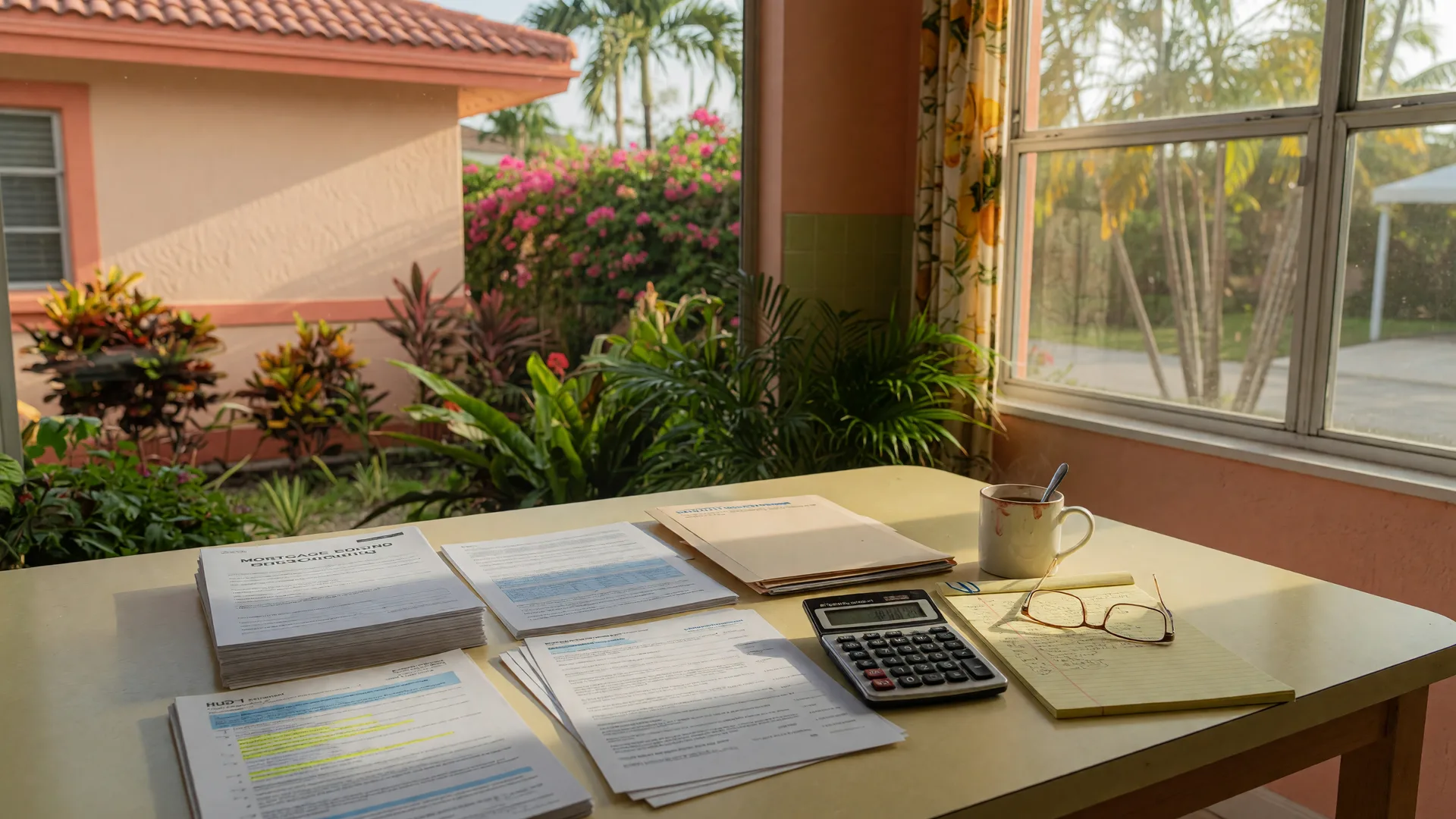
If you have a mortgage in Florida, your monthly payment almost certainly includes more than principal and interest. Most lenders collect a slice of your property taxes and homeowners insurance every month, hold it in an escrow account, and pay those bills for you when they come due. This guide explains how that account works, why your payment can jump even when your rate does not, and what the federal rules say a lender can and cannot do with your money. The figures and deadlines below come from federal mortgage servicing rules (RESPA, Regulation X) and Florida tax law, current as of 2026.
What an escrow account actually is
An escrow account (also called an impound account) is a holding account your mortgage servicer manages on your behalf. Each month you pay roughly one-twelfth of your estimated annual property tax bill and one-twelfth of your estimated annual insurance premium, on top of your principal and interest. When the tax bill or insurance premium comes due, the servicer pays it out of the account. You never see the money, and you never have to remember a November tax bill or a June insurance renewal.
In Florida this setup is common because the two biggest annual costs of owning here, property taxes and insurance, are large and lumpy. Florida has no state income tax, but homeowners carry their two biggest recurring costs through the tax and insurance bills instead. Escrow smooths those bills into a predictable monthly number, which is why lenders quote a combined tax-and-insurance escrow on most Florida mortgages.
The 2-month cushion: what lenders can hold
Federal rules under RESPA and Regulation X (12 CFR 1024.17) limit how much extra money a servicer can hold in your escrow account beyond the bills themselves. The cushion, a buffer against unexpected increases, cannot exceed one-sixth of the estimated total annual disbursements from the account. In plain terms, that works out to roughly two months of escrow payments. So if your taxes and insurance add up to about $6,000 a year, your servicer can hold about $1,000 as cushion on top of what is needed to pay the bills on time.
The annual escrow analysis and statement
Once a year, your servicer must run an escrow account analysis. It projects what your taxes and insurance will cost in the coming year, compares that to what is in your account, and sets your monthly escrow payment for the next 12 months. You also get an annual escrow statement showing the account activity: what came in, what was paid out, and the projected balance (12 CFR 1024.17).
This annual analysis is the moment most homeowners notice their payment changed. If your insurance premium went up, your tax bill rose, or your homestead exemption changed the picture, the analysis adjusts your monthly escrow payment to match. That is why a mortgage payment can go up even when your interest rate stayed the same. For a full look at what moves the tax side of that number, the Florida property taxes 2026-2027 guide walks through homestead, Save Our Homes, and the August TRIM notice.
Escrow shortage: why your payment jumped
An escrow shortage happens when the account balance is lower than the target balance at the time of the annual analysis. The usual cause is a bill that came in higher than projected, most often an insurance premium increase or a tax reassessment. Under Regulation X, how the shortage gets repaid depends on its size:
- Shortage smaller than one month's escrow payment: the servicer may do nothing, ask for repayment within 30 days, or spread it over at least 12 months.
- Shortage equal to or larger than one month's escrow payment: the servicer may do nothing or spread the repayment over at least 12 months. A lump-sum demand is not allowed for a shortage of this size, though you can always choose to pay extra yourself.
A deficiency, where the account actually goes negative because the servicer advanced funds, is handled separately and also requires an analysis before any repayment is collected (12 CFR 1024.17). The practical takeaway: a big escrow jump is usually a signal that an underlying cost, almost always insurance or taxes, went up, and the servicer is spreading that increase across the next 12 months.
Florida property tax timing and the early-payment discount
Florida property tax bills are mailed around November 1 and are due in full by March 31 of the following year; payments after that become delinquent on April 1 with penalties and interest. Florida also rewards early payers: 4% off in November, 3% in December, 2% in January, and 1% in February (Florida Statute 197.162). Because Florida taxes are paid in arrears, your first escrow contribution is collected at closing and builds up through the year so the servicer can pay the bill when it arrives.
The discount matters even though the servicer pays the bill: a servicer that pays in November keeps the 4% discount, and that saving is reflected in the escrow analysis. If you are estimating costs for a home you are considering, the Delray Beach property tax guide and the Palm Beach County tax calculator walkthrough show how the millage math lands on a specific home.
Homestead exemption lowers the tax side of escrow
The Florida homestead exemption removes up to $51,411 from the assessed value of your primary residence in 2026, which lowers your property tax bill and therefore lowers the amount your escrow account needs to collect. If you buy a home and do not file for the exemption by the March 1 deadline, your escrow payment will be set based on the higher, unexempted tax bill. Filing on time keeps both your tax bill and your monthly escrow payment as low as they should be.
Flood insurance is usually escrowed too
If your home is in a FEMA flood zone and you have a federally backed mortgage, your lender is generally required to escrow flood insurance premiums alongside your homeowners policy. Flood insurance is a separate policy from your standard homeowners coverage, and it is one of the line items that shows up in your annual escrow statement. Our flood insurance guide explains the NFIP versus private coverage decision, and the homeowners insurance crash course covers the full Florida insurance picture.
Do Florida escrow accounts pay interest?
Generally, no. Federal law does not require mortgage escrow accounts to pay interest, and Florida does not mandate interest on tax-and-insurance escrow accounts held by mortgage servicers. (Florida's interest-bearing escrow rules apply to real estate brokers' trust accounts and construction deposits, not to mortgage servicing escrows.) Whether you earn anything on the balance is up to your lender's policy, so do not count on escrow interest as part of your return on homeownership.
Your escrow checklist for 2026 and beyond
Here is the practical list I share with buyers and owners across Palm Beach County:
- Read the annual escrow statement. Check the projected balance and the cushion. The cushion cannot legally exceed about two months of escrow payments.
- Ask about a shortage before you pay it. For shortages of a month or more, the servicer must spread repayment over at least 12 months unless you choose otherwise.
- File your homestead exemption by March 1. It lowers the assessed value, the tax bill, and the escrow collected to pay it.
- Shop insurance before the analysis. A lower premium means a lower escrow payment for the next 12 months. The insurance savings guide lists the strategies that work in Florida.
- Budget the full monthly picture. Principal, interest, taxes, insurance, and HOA fees together. The real monthly cost of owning in South Florida shows how those line items stack up in 2026.
The bottom line
Escrow is not a mystery charge; it is your own tax and insurance money, collected monthly and paid out on your behalf, with federal limits on how much extra your servicer can hold. When your payment jumps, the escrow analysis is telling you that an underlying cost went up, and the rules give you options for how the shortfall gets repaid. Understanding the account turns an unpleasant surprise into a predictable line item you can plan around.
The rules cited here come from RESPA Section 10 and Regulation X (12 CFR 1024.17), the Consumer Financial Protection Bureau's mortgage servicing rules, and Florida Statute 197.162, all current as of 2026. If your servicer's numbers do not match your own records, the first step is always a call to the servicer, then the CFPB's mortgage servicing resources if the issue does not resolve.
Want the real monthly numbers for a home you are considering?
I can walk you through what taxes, insurance, and escrow would actually look like for a home in Delray Beach, Boca Raton, Boynton Beach, or anywhere in South Florida. No pressure, no obligation, just the numbers.
Sources: RESPA Section 10 and Regulation X (12 CFR 1024.17), the Consumer Financial Protection Bureau's mortgage servicing rules, and Florida Statute 197.162 (property tax discounts and due dates), all current as of 2026.

Ryan Parker
Realtor · Coldwell Banker Realty · SL3571861
Ryan Parker is a South Florida real estate agent with Coldwell Banker Realty who helps buyers, sellers, and owners make confident decisions about homes in Delray Beach, Boca Raton, Boynton Beach, and the surrounding communities. He focuses on homeownership education and honest, practical guidance for everyday people.
Related articles
What Is the Florida Homestead Exemption?
How to file, who qualifies, and how much you save.
How to Calculate Property Taxes in Palm Beach County
Millage rates and how the tax math works.
Homeowners Insurance Crash Course
Florida-specific coverage, costs, and savings.
Real Monthly Cost of Owning in South Florida
Insurance, taxes, HOA fees, and maintenance with 2026 numbers.
For neighborhood deep-dives and market insights, visit RyanParkerRealty.com.