September 24, 2026 · By Ryan Parker · Updated October 13, 2026
Florida Property Taxes 2026-2027: Homestead Exemption, Save Our Homes, and the March 1 Deadline
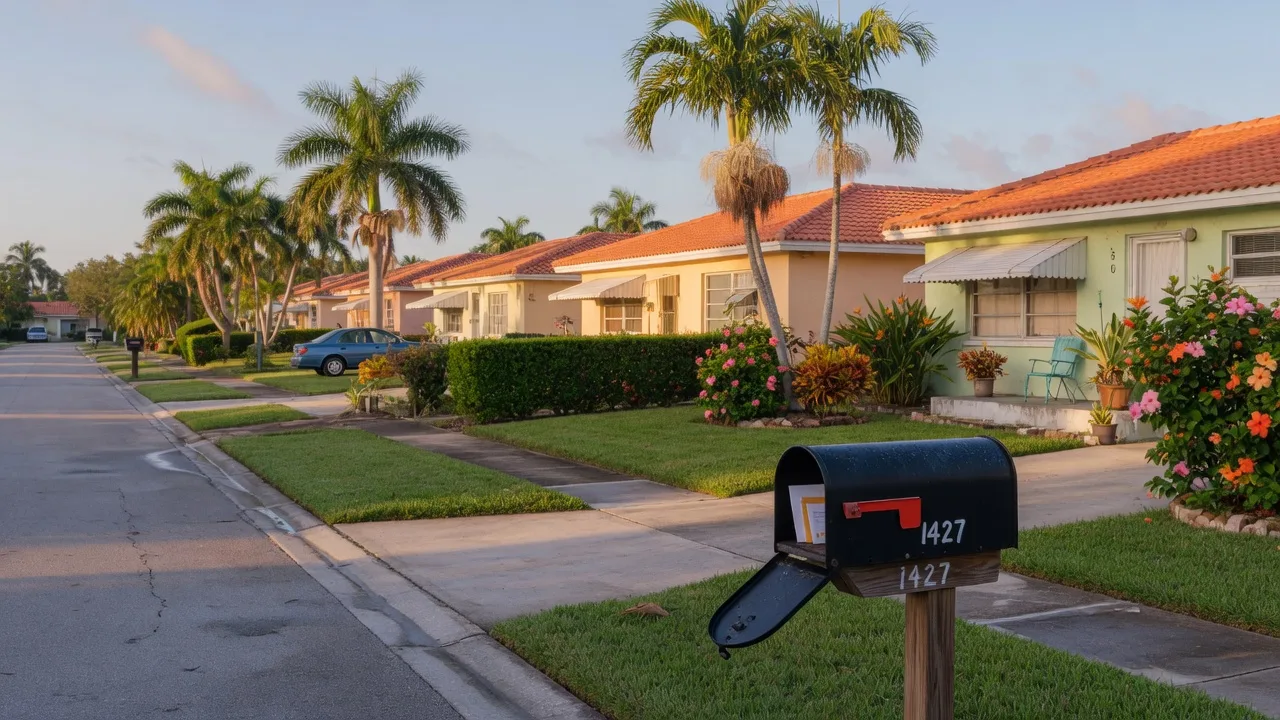
Property taxes are one of the biggest annual costs of owning a home in Florida, and they run on a calendar. For the 2027 tax year, homestead exemption applications are already being accepted by the Palm Beach County Property Appraiser's Office, and the filing deadline is March 1, 2027 (Palm Beach County Property Appraiser's Office, 2026). This guide walks through what the exemption actually saves you, how the Save Our Homes cap protects long-term owners, how portability works when you move within Florida, and the practical steps to file. Every figure is labeled with its source and the year it applies, because there is no reason to guess about your taxes.
The March 1, 2027 filing deadline
In Palm Beach County, homestead exemption applications for the 2027 tax year are open now, and the deadline is March 1, 2027. You can start the application online at pbcpao.gov, the Property Appraiser's Office website (Palm Beach County Property Appraiser's Office, 2026).
The exact date can shift when it has to. For the 2026 tax year, the deadline was March 2, 2026, because March 1 fell on a weekend (Palm Beach County Property Appraiser's Office, 2026). The same pattern applies any year March 1 lands on a Saturday or Sunday, so it always pays to confirm the date for the year you are filing.
What the homestead exemption actually saves you
Florida's homestead exemption removes up to $51,411 from the assessed value of a qualifying primary residence in 2026. The first $25,000 applies to all property taxes, and the additional exemption, inflation-adjusted to $26,411 for 2026 under Amendment 5, applies to all taxes except school district taxes (Florida law, in effect for 2026-2027). For a typical home, that works out to roughly $750 to $1,000 per year in property tax savings, according to the Palm Beach County Property Appraiser's Office (2026).
Two things are worth understanding before you file. The exemption applies to the assessed value, not the purchase price, and the exact dollar savings depends on the millage rates where you live. If you want the full math for your situation, our guide to how Palm Beach County calculates property taxes steps through it with examples.
Who qualifies for the 2027 exemption
To qualify for 2027, you must own the home and make it your permanent residence as of January 1, 2027 (Florida law; Palm Beach County Property Appraiser's Office, 2026). A few specifics that catch people off guard:
- Only your primary residence qualifies. A second home, vacation property, or investment property does not.
- You can hold only one homestead exemption in Florida at a time.
- The Property Appraiser's Office looks for proof that the address is your permanent home. That generally means documents that tie you to the property as your residence, not just ownership of it (Palm Beach County Property Appraiser's Office, 2026).
Save Our Homes: the cap that protects long-term owners
Once you have a homestead exemption, Save Our Homes caps the annual increase in your assessed value at the lower of 3% or the Consumer Price Index (Florida law, in effect since 1995; the cap is 2.7% for the 2026 tax year). The practical effect: a big jump in your home's market value does not automatically become a big jump in your tax bill. Owners who have homesteaded for years are protected from the kinds of assessment spikes that hit non-homesteaded properties.
Portability: take your benefit with you when you move
If you sell your homesteaded home and buy another Florida home that becomes your primary residence, portability lets you transfer up to $500,000 of your accumulated Save Our Homes benefit to the new home (Florida law). In plain terms, the years of capped assessment growth you built up are not lost when you move within Florida, whether you are upsizing, downsizing, or relocating from one part of Palm Beach County to another.
Missed the deadline? Late filing still exists
Filing after the deadline is possible, but it is a different process. Late applications may require visiting a Property Appraiser service center in person rather than filing online (Palm Beach County Property Appraiser's Office, 2026). For the 2026 tax year, a late-filed application had to be filed by mid-September 2026 to be eligible, so anyone who missed that window should make the March 1, 2027 deadline the target now (Palm Beach County Property Appraiser's Office, 2026).
The TRIM notice in August: your 25-day window
Every August, Florida property owners receive a TRIM notice, short for Truth in Millage, from the Property Appraiser's Office. It shows your proposed assessment for the coming tax year, the proposed millage rates, and your estimated taxes. If you disagree with the proposed assessment, the notice starts a 25-day window to file a petition with the Value Adjustment Board (Florida law). For a full walkthrough of that appeal, from the free informal review to the evidence that wins, see the step-by-step guide to appealing your Florida property tax assessment.
The TRIM notice is not a tax bill; it is an estimate and your heads-up that the final bill is coming later in the year. If you are buying, the August notice is also a useful real-world check on what the prior owner was paying and what your bill may look like at a new assessment.
For 2026-2027 buyers: budget taxes and insurance together
If you are buying in 2026-2027, plan property taxes and insurance as one line item. Florida has no state income tax, which is a real advantage, but it also means homeowners here carry their two biggest annual costs through property tax and insurance instead (Florida law; this is why lenders quote a combined tax-and-insurance escrow on Florida mortgages). In South Florida, those two costs are what move the monthly picture most, whether the home is in Delray Beach, Boca Raton, Boynton Beach, or anywhere else in the county.
For the Delray Beach picture specifically, our guide to how much property taxes are in Delray Beach has the millage details, and if you are building your full budget, the hidden costs of owning a home in Florida guide lays out everything beyond the mortgage.
Your 2026-2027 property tax checklist
Here is the practical list I share with buyers and owners in Palm Beach County:
- File by March 1, 2027. For the 2027 tax year, that is the date to protect. It is the single most important item on this list.
- Apply online at pbcpao.gov. The Palm Beach County Property Appraiser's Office accepts homestead exemption applications through its website, no trip required.
- Bring proof of residency. Own the home and make it your permanent residence as of January 1, 2027, and have the documents that show the address is your home.
- Watch for the TRIM notice in August. When it arrives, check the proposed assessment and mark the 25-day window if you want to appeal to the Value Adjustment Board.
- Consider portability when moving within Florida. Selling and rebuying in-state can transfer up to $500,000 of your accumulated Save Our Homes benefit to the new home.
The bottom line
The homestead exemption, Save Our Homes, and portability together are the difference between a tax bill that feels fair and one that catches you off guard. The rules are straightforward, but the details, the proof of residency, the filing windows, and how the numbers land on a specific home are where buyers and owners get confused. That is exactly what I help people with.
The figures in this guide come from the Palm Beach County Property Appraiser's Office (pbcpao.gov), the Florida Department of Revenue, and Florida law, all current as of 2026-2027. If your situation has wrinkles, a home that changed hands mid-year, a move from another state, or a sale and rebuy in the same county, the Property Appraiser's Office and a local agent who knows the market are the two places to get a straight answer.
Want the tax picture for your neighborhood?
I can walk you through what property taxes, insurance, and escrow would actually look like for a home you are considering in Delray Beach, Boca Raton, or anywhere in South Florida. No pressure, no obligation, just the numbers.
Sources: Palm Beach County Property Appraiser's Office (pbcpao.gov), the Florida Department of Revenue, and Florida law (homestead exemption, Save Our Homes, portability, and TRIM provisions), all current as of 2026-2027.

Ryan Parker
Realtor · Coldwell Banker Realty · SL3571861
Ryan Parker is a South Florida real estate agent with Coldwell Banker Realty who helps buyers, sellers, and owners make confident decisions about homes in Delray Beach, Boca Raton, Boynton Beach, and the surrounding communities. He focuses on homeownership education and honest, practical guidance for everyday people.
Related articles
What Is the Florida Homestead Exemption?
How to file, who qualifies, and how much you save.
How to Calculate Property Taxes in Palm Beach County
Millage rates and how the tax math works.
Property Taxes in Delray Beach
What owners in this area actually pay.
South Florida Property Tax Guide
Everything buyers and sellers should know.
For neighborhood deep-dives and market insights, visit RyanParkerRealty.com.