Start with these structural preparations
These are the most important things you can do to protect your home from hurricane damage. Start early — some of these take weeks or months to complete.
1. Get a roof inspection
Your roof is your home's first defense against a hurricane. Have a licensed roofer inspect it for loose shingles, cracked tiles, worn flashing, and any signs of leaks. If your roof is over 15 years old, consider replacing it before hurricane season. A new roof not only protects your home but also qualifies you for insurance discounts.
2. Install impact windows or hurricane shutters
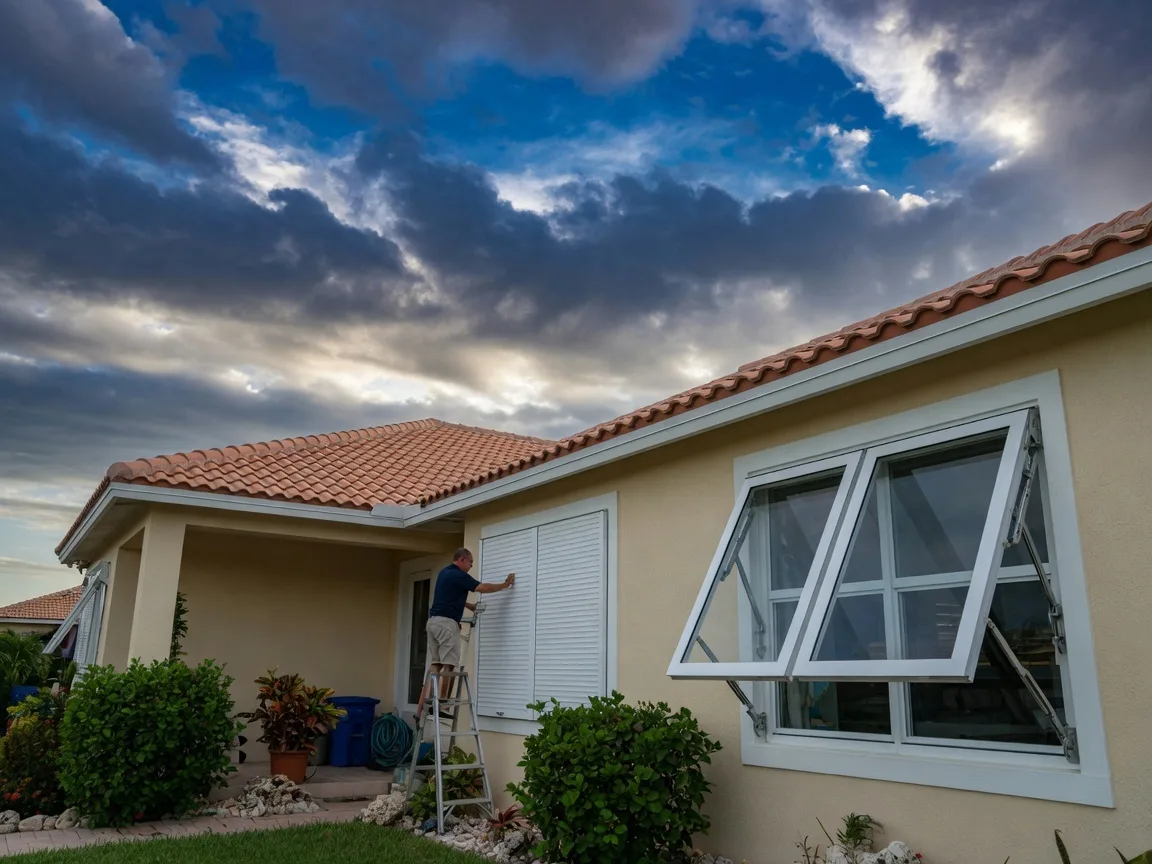
Impact windows are the gold standard for hurricane protection — they're permanent, convenient, and save on insurance. If impact windows aren't in your budget, approved hurricane shutters (accordion, roll-down, or storm panels) are an effective alternative. Test your shutters before each season to make sure they operate smoothly. If you use plywood, make sure it's pre-cut, labeled, and stored with the necessary hardware.
3. Secure doors and garage
Your garage door is often the weakest point in a home's hurricane defense. Consider installing a bracing system or replacing an older garage door with a wind-rated model. Reinforce entry doors with heavy-duty deadbolts and longer screws in the hinges. Sliding glass doors should have impact-rated glass or be covered with shutters.
4. Trim trees and secure loose items
Trim branches that could fall on your home or vehicles during a storm. Remove dead trees or limbs. Before a storm arrives, bring in or secure anything that could become a projectile: patio furniture, grills, potted plants, garbage cans, decorations, and garden tools. Store them in a garage or shed when a storm is approaching.
Review your insurance coverage
This is something you should do well before a storm is forecast. Once a storm enters the Gulf or Atlantic, many insurers stop writing new policies and freeze changes.
- Check your coverage limits — make sure your dwelling coverage is enough to rebuild your home at current construction costs. Building costs in South Florida have risen significantly
- Understand your hurricane deductible — most Florida policies have a separate hurricane deductible, typically 2% to 5% of your dwelling coverage. On a $350,000 home, a 2% deductible is $7,000
- Review your flood insurance — standard homeowners policies do NOT cover flood damage. You need a separate flood insurance policy through the NFIP or a private insurer
- Document everything — take photos and video of every room in your home, including closets, cabinets, and the exterior. Store a copy in the cloud or with a trusted contact outside your area
- Create a home inventory — list your belongings with estimated values, serial numbers, and photos. This makes filing a claim much easier
Build your hurricane emergency kit
FEMA recommends having supplies to last at least 72 hours, but in South Florida, it's smart to prepare for a week or more. Power outages can last days or weeks after a major storm.
- Water — one gallon per person per day for at least 7 days
- Non-perishable food — canned goods, protein bars, peanut butter, and a manual can opener
- Medications and first aid — a 2-week supply of prescription medications, plus a basic first aid kit
- Flashlights and batteries — avoid candles due to fire risk after a storm
- Portable phone charger — a fully charged power bank can keep your phone running for days
- Cash — ATMs may not work after a storm. Keep enough cash for a week or more
- Important documents — insurance policies, IDs, medical records, and deeds in a waterproof container
- Generator — if you have a generator, test it before hurricane season and store fresh fuel safely
- Pet supplies — food, water, medications, and a carrier for each pet
- Cleaning supplies — bleach, trash bags, and a wet/dry vacuum for post-storm cleanup
Know your evacuation zone
Palm Beach County has designated evacuation zones. Know your zone and have a plan. If you live in a mobile home, low-lying area, or flood zone, you should have a plan to evacuate when a hurricane approaches. Know your county's evacuation routes and have a destination in mind (a friend or family member outside the evacuation zone, or a hotel further inland).
The bottom line
Hurricane preparation is a year-round responsibility for Florida homeowners. The most important steps are: protect your roof and windows, review your insurance coverage before storm season, document your home and belongings, and build an emergency kit. A little preparation now can save you thousands of dollars and a lot of stress when a storm is heading our way. I can help you understand how a home's hurricane features affect its value and insurance costs.