August 3, 2026 · By Ryan Parker
Should you buy a Florida home before the end of 2026? Understanding the proposed homestead tax changes
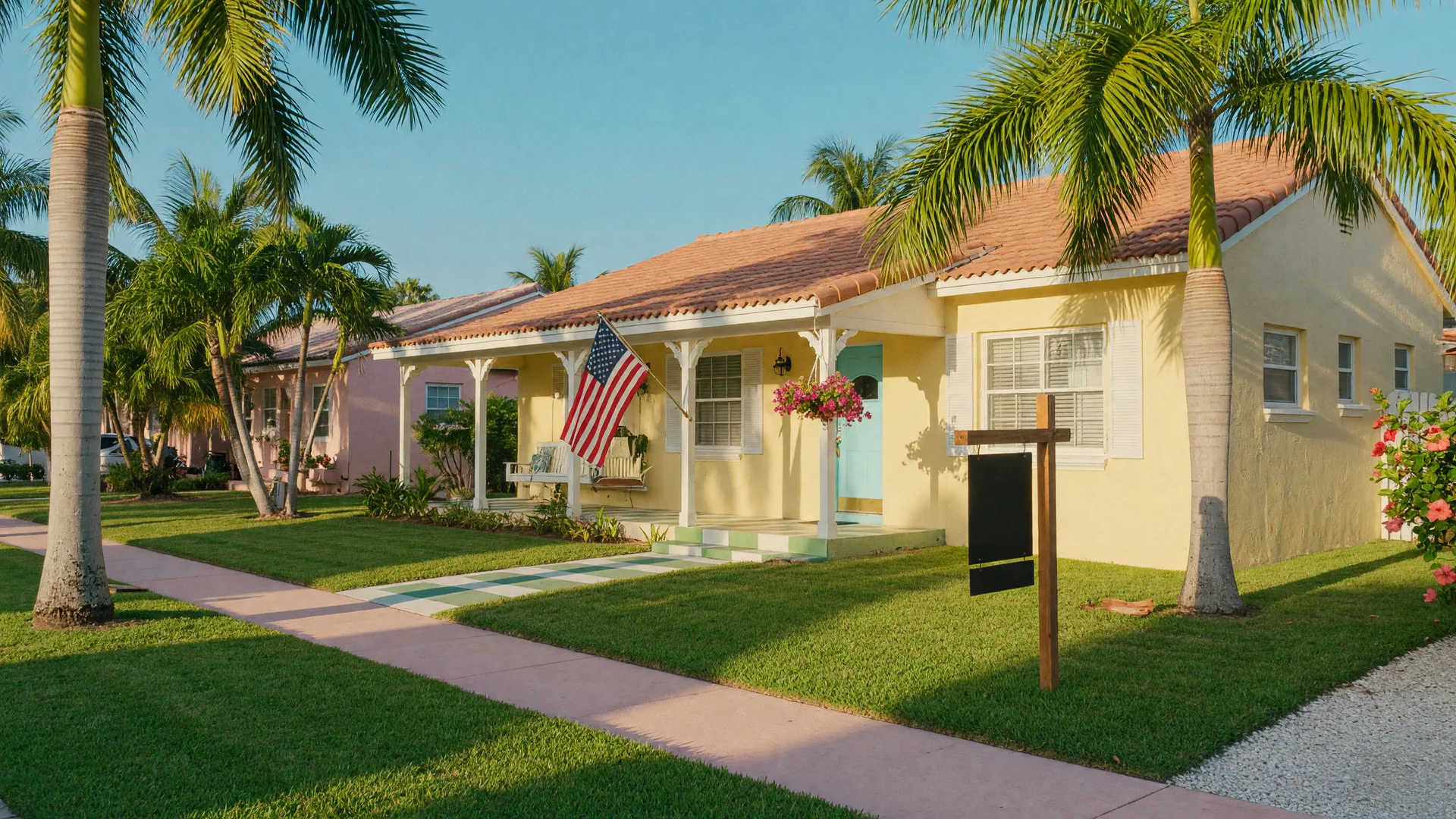
Florida homeowners and buyers are facing a significant change to the Homestead Exemption starting in 2026. If you're thinking about buying a home in South Florida, the timing of your purchase could save you thousands of dollars over the long term.
In June 2026, the Florida Legislature passed a property tax reform package that will appear on the November 2026 ballot as Amendment 3. If approved by voters, it would transform how property taxes work for homeowners, especially for those who buy after the effective date. This guide breaks down what's changing, who it affects, and whether buying before the end of 2026 makes sense for you.
What is the Florida Homestead Exemption?
The Florida Homestead Exemption is one of the most valuable benefits of homeownership in the state. It's a property tax break available to anyone who owns and occupies their home as their primary residence as of January 1 of the tax year.
Here's how it works today:
- $50,000 exemption on assessed value. The first $25,000 applies to all property taxes, and the second $25,000 applies to all taxes except school district taxes.
- Save Our Homes 3% cap. Once you have a homestead exemption, your assessed value cannot increase more than 3% per year, regardless of how much your home's market value goes up. This is a massive long-term benefit that has saved long-time Florida homeowners tens of thousands of dollars.
- Portability. If you sell your homesteaded home and buy another in Florida, you can transfer up to $500,000 of your accumulated Save Our Homes benefit to your new home.
The Homestead Exemption protects homeowners from being priced out of their homes by rising property taxes. It's a big reason why Florida continues to attract new residents from high-tax states like New York, Illinois, and California.
For a deeper dive into how the exemption works and how to file, check out our guide: What is the Florida Homestead Exemption?
What changes in 2026?
The Florida Legislature passed HJR 1F (the "Save Our Homes from Excessive Property Taxes" amendment) in a June 2026 special session. It passed the House 75-26 and the Senate 30-9, and will appear on the November 3, 2026 ballot as Amendment 3. It needs a 60% voter supermajority to become law.
Here are the key proposed changes:
- Bigger exemption for existing homeowners. The non-school homestead exemption would increase from $50,000 to $150,000 starting January 1, 2027, then to $250,000 starting January 1, 2028, with annual inflation adjustments. This would eliminate non-school property taxes for roughly 60% of homesteaded Florida homeowners.
- New resident phase-in. Anyone who establishes Florida residency after December 31, 2026 would receive only the current $50,000-equivalent non-school exemption for their first five years of ownership. After five years, they become eligible for the full $250,000 exemption.
- Assessment reset. All homestead assessed values would reset to just (market) value as of January 1, 2027, then the existing 3% annual cap continues going forward.
- Non-homestead cap reduction. The assessment cap for non-homestead residential property drops from 10% to 5% annually, effective January 1, 2027.
The most impactful change for anyone who hasn't bought yet? New residents who buy after December 31, 2026 would face a five-year waiting period before they can access the enhanced exemption. During those five years, their tax bill would be based on the current $50,000 exemption structure, while long-time owners across the street could be paying significantly less thanks to the new $250,000 exemption.
For a complete breakdown of how property taxes work in Palm Beach County, see our guide: Delray Beach Property Tax Guide 2026.
Who is most affected?
These changes don't affect everyone equally. Here's who should pay closest attention:
First-time buyers
If this is your first home purchase in Florida, you have no existing homestead protection to carry over. Buying before the end of 2026 means you establish your homestead exemption under the current rules, and you'd be grandfathered into the enhanced exemption structure as it phases in. Buying in 2027 or later means you'd face the five-year phase-in period at the $50,000 level.
Buyers purchasing from long-time owners
When a long-time owner sells a home they've homesteaded for years, the assessed value resets to the purchase price. This means a home the seller was paying taxes on at $400,000 could be assessed at $600,000 or more for you as the new buyer. The tax jump can be $3,000 to $5,000 per year or more, depending on the home's value and the seller's tenure. This tax gap already exists under current law, but the 2026 changes could widen it for new owners who miss the deadline.
Investors buying homestead-eligible properties
Investors don't qualify for homestead exemptions, but the properties they buy often come from homesteaded sellers. Under the proposed changes, the assessment gap between homesteaded and non-homesteaded properties would widen, making it more expensive to hold properties that aren't your primary residence. The non-homestead cap dropping from 10% to 5% does help, but it's still higher than a homesteaded owner's 3% cap.
People relocating from out of state
If you're planning to move to Florida, the timing of your home purchase matters more than ever. Buy a home and establish residency before the end of 2026, and you'd be treated like any existing Florida homeowner under the new rules. Move in 2027 or later, and you'd face the five-year phase-in period. This is especially important for families relocating for work who may have flexibility in timing.
Real numbers example: A home assessed at $400,000 by a long-time owner may be assessed at $600,000 or more for a new buyer. With Palm Beach County's millage rates around 18-21 mills, the difference in annual property taxes could be $3,000 to $5,000+ per year. Over five years, that's $15,000 to $25,000 in extra taxes.
For more detailed tax numbers specific to Delray Beach, see: How Much Are Property Taxes in Delray Beach?
Should you buy before the end of 2026?
This is the question I hear most from clients right now. Here's my honest take, with arguments on both sides.
Arguments for buying now
- Lock in current protections. Buying and establishing residency before December 31, 2026 means you're treated as an existing homeowner under the new rules. You'd access the full enhanced exemption on the normal timeline, not the five-year phase-in.
- Lower assessment starting point. Current assessments may be lower than what a new buyer would face after the reset. Even though assessments reset in 2027, being established as a homestead owner before the reset gives you the full Save Our Homes cap from day one after the reset.
- The Save Our Homes cap continues to protect you. Once you have homestead status, your assessed value can't increase more than 3% per year. That protection is extremely valuable in a market where home values have been appreciating 8-12% annually.
- Interest rate considerations. If rates come down in 2027, you can refinance. But if they go up, you're glad you locked in when you could. Trying to time the rate market is almost always a losing game.
Arguments for waiting (being balanced)
- Rushing into a purchase isn't always smart. Buying a home is one of the biggest financial decisions you'll make. Don't let a tax deadline push you into a home you're not ready for or one that doesn't meet your needs.
- Personal readiness matters more than tax timing. If you're not financially ready, if your credit needs work, or if you haven't saved enough for a down payment, rushing could cost you more than the tax savings.
- Find the right home first. The best financial decision is to buy a home that works for your life and your budget. A slightly higher tax bill on the right home is better than a lower tax bill on a home you regret.
- The amendment still needs to pass. Amendment 3 needs 60% voter approval in November. While it has broad bipartisan support, it's not guaranteed. If it fails, the rules stay as they are.
The sweet spot: If you were already planning to buy in the next 12-18 months, and you're financially ready, accelerating your timeline to close before the end of 2026 makes a lot of sense. The tax savings over five years could be significant. But if you weren't planning to buy, or you're not ready, don't force it.
For a deeper look at timing the market vs. your personal readiness: Should I Buy Now or Wait in South Florida?
What about sellers?
If you're selling a home in South Florida, the proposed tax changes affect you too. Here's what to keep in mind:
- Buyers may offer less. Savvy buyers are already factoring in the higher tax burden when they make offers. If a buyer knows they'll face a five-year phase-in period, they may discount their offer to account for the extra $3,000-$5,000 per year in taxes.
- Negotiation dynamic has shifted. Sellers with low assessments (long-time owners who've benefited from the Save Our Homes cap for years) may find that buyers are more reluctant to pay a premium when the tax reset is so significant.
- Pricing strategy matters more than ever. The right price now needs to account for the buyer's total cost of ownership, including the tax implications. Overpricing is even more dangerous in this environment.
If you're planning to sell, understanding how these tax changes affect buyer behavior is crucial to pricing your home correctly. Read our guide: How to Price Your Home Correctly.
Math examples for Delray Beach, Boca Raton, and Highland Beach
Let's look at real numbers for specific neighborhoods. These examples use Palm Beach County's approximate millage rate of 19 mills ($19 per $1,000 of assessed value), which is a blended rate including county, city, school district, and special district taxes.
Example 1: Delray Beach home at $600,000
Long-time owner scenario:
- Assessed value after years of 3% cap: approximately $400,000
- After current $50,000 homestead exemption: $350,000
- Annual taxes at 19 mills: approximately $6,650
New buyer scenario (buying in 2027, no grandfathered status):
- Assessed value resets to purchase price: $600,000
- After current $50,000 exemption (phase-in period): $550,000
- Annual taxes at 19 mills: approximately $10,450
- Annual difference: $3,800
- 5-year difference: $19,000
- 10-year difference: $38,000+
New buyer scenario (buying in 2026, establishing homestead):
- Same purchase price of $600,000
- Homestead established under current rules, then transitions to enhanced exemption
- Access to full $250,000 exemption after phase-in (no five-year new resident delay)
- Far lower long-term tax burden than the 2027 buyer
Example 2: Boca Raton home at $750,000
Long-time owner scenario:
- Assessed value after years of 3% cap: approximately $480,000
- After current $50,000 homestead exemption: $430,000
- Annual taxes at 19 mills: approximately $8,170
New buyer scenario (buying in 2027):
- Assessed value resets to purchase price: $750,000
- After current $50,000 exemption (phase-in period): $700,000
- Annual taxes at 19 mills: approximately $13,300
- Annual difference: $5,130
- 5-year difference: $25,650
- 10-year difference: $51,300+
Example 3: Highland Beach waterfront condo at $1,000,000
Long-time owner scenario:
- Assessed value after years of 3% cap: approximately $580,000
- After current $50,000 homestead exemption: $530,000
- Annual taxes at 19 mills: approximately $10,070
New buyer scenario (buying in 2027):
- Assessed value resets to purchase price: $1,000,000
- After current $50,000 exemption (phase-in period): $950,000
- Annual taxes at 19 mills: approximately $18,050
- Annual difference: $7,980
- 5-year difference: $39,900
- 10-year difference: $79,800+
These numbers illustrate a clear pattern: the longer a seller has owned their home, the wider the tax gap becomes for a new buyer. Buying before the end of 2026 and establishing homestead status under current rules can save you tens of thousands of dollars over a decade.
How Ryan can help
These tax changes are complex, and the deadline creates a sense of urgency. But urgency without good information can lead to bad decisions. That's where I come in.
I help buyers navigate these changes every day. When we look at a property together, I'll show you not just the purchase price but the full picture:
- What the current owner is paying in taxes versus what you would pay
- How the proposed changes affect your specific situation
- Whether accelerating your timeline makes financial sense for you
- Market analysis that accounts for tax implications, not just comparable sales
- Connections to trusted lenders who can pre-approve you quickly if timing matters
Thinking about buying before the end of 2026?
I'll help you understand the tax implications and run the numbers on any property you're considering. No pressure, just honest guidance.
Or, if you want to get pre-approved first and know exactly what you're working with, ask me for a lender introduction. A good local lender knows the South Florida market well and can run your numbers for you.
Get pre-approved fast
A lender can show you what you qualify for and how the tax changes affect your buying power. Ryan can connect you with one.
Ask Ryan for a Lender ReferralKey takeaways
- The Homestead Exemption changes are real and significant. Amendment 3 on the November 2026 ballot would fundamentally change Florida's property tax system. New residents who buy after 2026 would face a five-year phase-in period for the enhanced exemption.
- If you're planning to buy, timing matters. Buying and establishing residency before December 31, 2026 could save you $3,000 to $8,000 per year in property taxes compared to buying in 2027, depending on the home's value.
- Don't let tax changes drive your entire decision, but factor them in. The right home at the right price is still the most important thing. But if you're already planning to buy, accelerating your timeline is a smart financial move.
- Talk to a knowledgeable local agent who understands the implications. Not every agent understands how these tax changes affect pricing, negotiations, and long-term costs. Make sure yours does.
- The amendment still needs to pass. Nothing changes until voters approve Amendment 3 in November 2026. But planning ahead is always better than scrambling at the last minute.
Explore more resources: RyanParkerRealty.com · SouthFloridaBuyerGuide.com · SouthFloridaSellerGuide.com
Neighborhood guides: Seagate Guide · Seven Bridges Guide · Seagate Homeowner Guide 2026
Buying guides: Should I Buy in Delray Beach? · First-Time Buyer Guide · Closing Costs Explained

Ryan Parker
Realtor · Coldwell Banker Realty · SL3571861
5-Star Google Rating
Ryan Parker is a South Florida real estate agent specializing in helping everyday buyers find affordable homes in Delray Beach, Boca Raton, Boynton Beach, and nearby communities. He connects buyers with local lenders who help them get pre-approved and into homes with confidence.
Related articles
What Is the Florida Homestead Exemption?
How to file, who qualifies, and how much you save.
Should I Buy Now or Wait?
Timing the South Florida market.
Delray Beach Property Tax Guide
Millage rates, exemptions, and what you'll pay.
South Florida Property Tax Guide
Everything buyers and sellers should know.
More from Ryan Parker: Closing Costs in Florida · South Florida Real Estate Investment · First-Time Buyer Guide