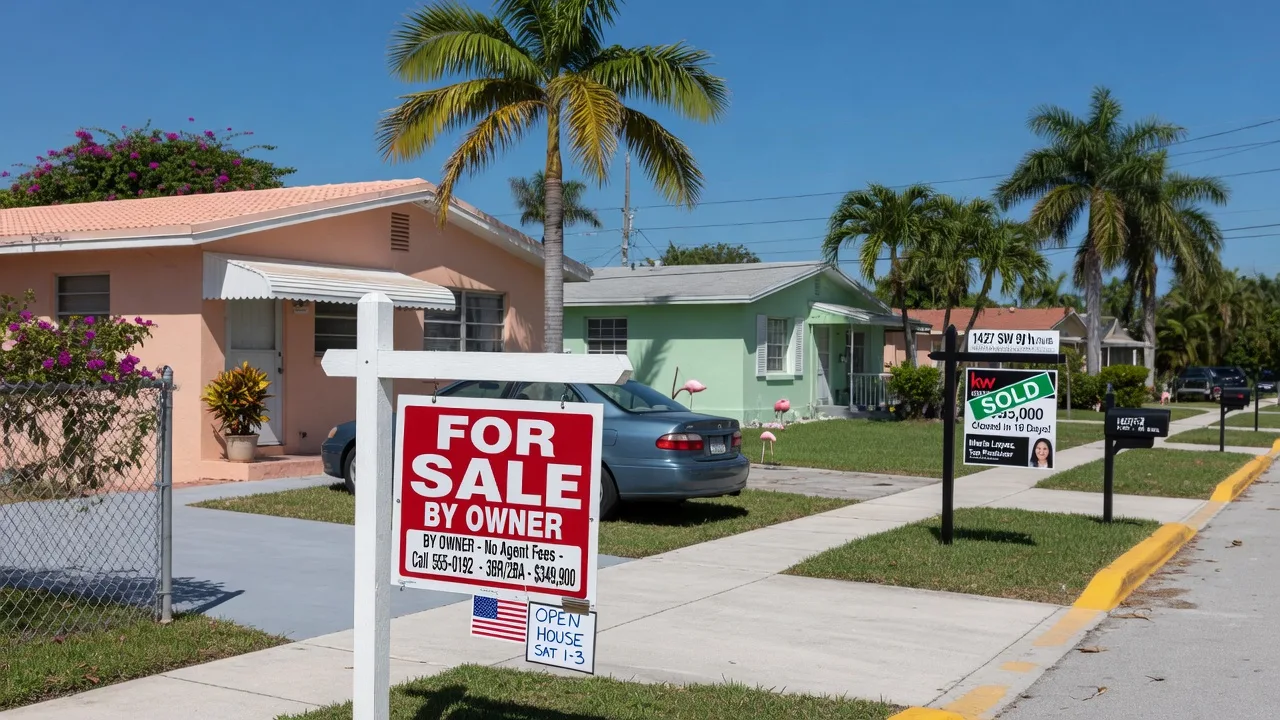
The question every seller asks: can I save money by selling my home myself (FSBO), or is using an agent worth the commission? The honest answer is: it depends on your situation. Let's break down the real costs, benefits, and trade-offs so you can make the right call.
The FSBO myth: "I'll save the commission"
The biggest reason people consider selling without an agent is the commission savings. If a typical agent commission is 5-6% split between the listing and buyer's agent, selling on your own could save you 2.5-3% on the listing side. On a $350,000 home, that's $8,750 to $10,500.
But here's what the data shows: according to the National Association of Realtors, the median FSBO home sold for $310,000 in recent years, while agent-assisted homes sold for $405,000. That's a 23% difference. Even accounting for the commission, agent-assisted sellers came out ahead by a significant margin.
Why the gap? Several reasons:
Pricing: Agents price homes based on data and market analysis. FSBO sellers often overprice out of emotional attachment, which leads to longer days on market and eventual price reductions.
Exposure: Agent-listed homes go on the MLS, syndicate to dozens of websites, and benefit from agent networks. FSBO homes typically have less exposure, especially to buyers represented by agents.
Negotiation: Agents are trained negotiators. FSBO sellers are emotionally invested and may accept less favorable terms.
Buyer agent commission: Even if you sell FSBO, most buyers will have their own agent, and you'll need to offer a commission to that agent (typically 2.5-3%) or risk losing those buyers entirely.
What agents actually do (that you might not want to do yourself)
If you're considering FSBO, ask yourself honestly: are you prepared to handle all of the following?
Pricing strategy: Running a comparative market analysis (CMA) with recent sold data, adjusting for property condition, location, and market trends
Marketing: Professional photography, listing on the MLS, syndication to Zillow/Realtor.com/Redfin, social media promotion, and open houses
Showing coordination: Scheduling and managing showings, following up with buyer agents, keeping the home showing-ready
Contract management: Drafting, presenting, and negotiating purchase agreements, addenda, and contingencies
Leads and inquiries: Screening buyer inquiries, pre-qualifying buyers, managing phone calls and emails
Inspections and negotiations: Managing the inspection period, negotiating repair requests, keeping the deal on track
Appraisal support: Providing comparable sales data to the appraiser if the appraisal comes in low
Closing coordination: Working with the title company, lender, and buyer's agent to get to the closing table
Problem solving: Handling issues that come up during the transaction — title problems, financing delays, inspection surprises
If you're a real estate-savvy person with time, patience, and the ability to stay objective about your own home, you can handle some of these. But most people underestimate the time and stress involved.
When FSBO actually makes sense
Despite the stats, there are situations where selling without an agent can work well:
You already have a buyer. If you're selling to a family member, friend, or neighbor, and you both agree on price, an agent's role is minimal. You still need a real estate attorney to handle the paperwork.
You're in a hot seller's market. In a market where homes are getting multiple offers in days, the marketing advantage of an agent matters less. You still need someone to handle the contract and negotiations.
You're a licensed real estate professional. If you have a license yourself, you can list on the MLS and handle the transaction. This is the most common FSBO success story.
You're selling a very low-priced home. On a $150,000 property, the commission savings might be $4,500, and the risk of pricing mistakes is lower. But you still need to handle the process.
When using an agent is the clear winner
You need to maximize your sale price. Agents with a track record of getting above asking price typically earn their commission through better pricing strategy and negotiation.
You have a busy schedule. If you can't take calls during the day, coordinate showings, or manage the details, an agent handles everything for you.
You're not local. If you've moved out of the area or are selling a rental property, you need someone on the ground.
Your home needs marketing. Professional photography, virtual tours, and online listings make a huge difference in how buyers perceive your home.
You're not confident in negotiations. A good agent protects your interests through every step of the transaction.
The hybrid option: flat-fee MLS listing
There's a middle ground. Some services offer a flat-fee MLS listing (typically $200 to $500) that gets your home on the Multiple Listing Service, syndicating it to Zillow, Realtor.com, and other sites. You still handle everything else yourself — showings, negotiations, paperwork, closing.
This can work if you're confident in pricing and handling the process, but it still leaves you exposed on the negotiation and legal side. Many flat-fee listings end up converting to full-service representation when the seller gets overwhelmed.
The bottom line
For most sellers in the $250,000 to $600,000 range, a good agent more than earns their commission through a higher sale price, less stress, and a smoother process. FSBO can work in specific situations, but it's not the money-saving shortcut many people assume. The best approach: interview a few agents, ask about their marketing plan and pricing strategy, and decide if the value they offer is worth the cost. Read our full seller's guide for more information.