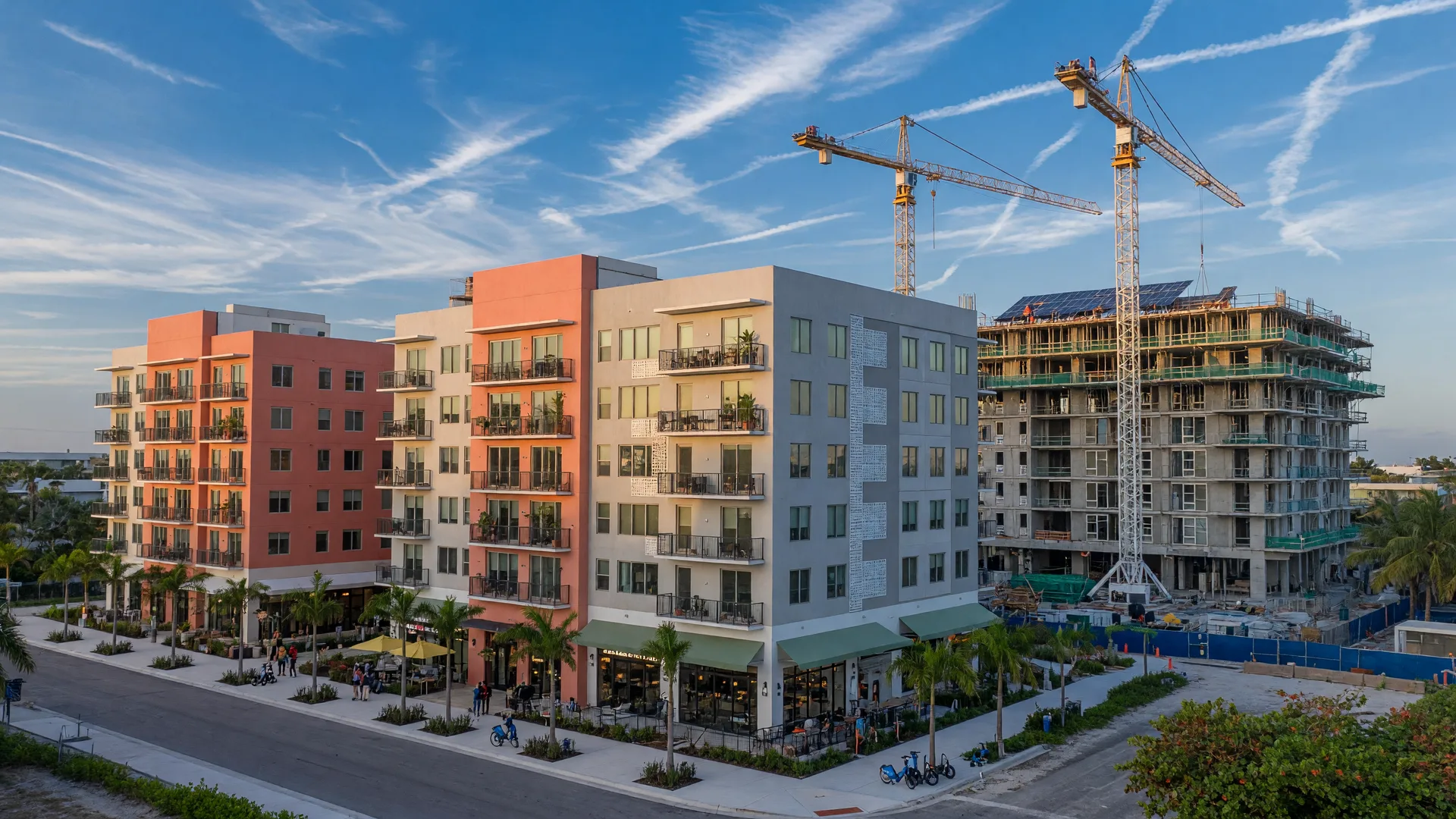
The 2026 market: different from 2021, but still strong
Let's be honest: the 2021-2022 market was a once-in-a-lifetime anomaly. Prices were climbing 20%+ annually, buyers were waiving inspections, and investors were making offers sight unseen. That market is over, and that's actually a good thing for long-term investors.
In 2026, the South Florida market has normalized. Price appreciation has slowed to a more sustainable 4-7% annually in most areas. Inventory has increased, giving buyers more choices. And interest rates, while higher than the pandemic lows, have stabilized around 6-7% for conventional mortgages.
The result: a healthier market where fundamentals matter more than FOMO. Cash flow is possible again if you buy right, and appreciation is still outpacing inflation in most South Florida neighborhoods.
Rental demand: still the strongest in the country
South Florida's rental market remains one of the strongest in the United States. Here's why:
- Population growth: Florida has been the fastest-growing state in the country for years, and South Florida is the primary destination for new residents. People keep moving here for jobs, weather, and no state income tax.
- Limited supply: Land is finite in coastal South Florida. New construction is happening, but it's constrained by zoning, permitting, and rising construction costs. This limits supply and supports property values.
- High homeownership barriers: With higher interest rates and prices, many would-be buyers are staying in the rental market longer, keeping rental demand strong and vacancy rates low.
- Seasonal and short-term rental demand: South Florida's winter population swells with snowbirds, creating strong seasonal rental opportunities — though local regulations on short-term rentals are tightening in many cities.
Typical cap rates in South Florida currently range from 4% to 6%, depending on the neighborhood. Boynton Beach, Lake Worth Beach, and parts of Deerfield Beach offer the best cash-flow potential, while coastal areas tend to have lower cap rates but stronger appreciation. See our full investing guide for more details.
Appreciation trends: what to expect
Long-term appreciation in South Florida has historically averaged 4-7% annually. Here's what the numbers look like going into 2026:
Appreciation by neighborhood type (2026 projections)
- Established coastal areas (Delray Beach, Boca Raton): 3-5% annual appreciation — steady, lower risk, but higher entry prices
- Up-and-coming areas (Boynton Beach, Lake Worth): 5-8% annual appreciation — higher potential, more risk, lower entry prices
- Western suburbs (West Boca, Parkland): 4-6% annual appreciation — school districts draw family demand, newer construction
- Beach-adjacent condos: 2-4% annual appreciation — condo fees and insurance costs are eating into returns
These are projections, not guarantees. Past performance does not predict future results. But the fundamentals — population growth, limited land, strong demand — continue to support appreciation in South Florida.
The risks every investor needs to know
Investing in South Florida is not without risks. Here are the biggest ones in 2026:
Insurance costs
This is the #1 risk factor for Florida real estate investors. Homeowners insurance has more than doubled in some areas over the past five years. For rental properties, you'll also need landlord insurance, which is even more expensive. Some investors are seeing their insurance costs eat up 30-50% of their rental income. Before buying any property, get a firm insurance quote and factor in annual increases of 10-20%.
Property taxes
Florida has no state income tax, but property taxes are real. The effective rate in Palm Beach County is about 1.1% of assessed value. And unlike homesteaded properties (which are capped at 3% annual increases, or inflation when lower, 2.7% for 2026), investment properties have no assessment cap. On a $400,000 property, that's $4,400 per year, and it can increase significantly if the property appreciates.
Hurricane risk
Climate risk is real and growing. Properties in high-risk flood zones face higher insurance costs and potential resale challenges. Investments in well-built, modern homes with impact windows and newer roofs are significantly less exposed. Always check flood zone designations and consider the long-term climate outlook.
Regulatory changes
Local governments are cracking down on short-term rentals (Airbnb/VRBO). Many cities now require permits, occupancy limits, and minimum rental periods. Condo associations also frequently restrict rentals. If your investment strategy depends on short-term rentals, verify the local regulations before buying.
Where the smart money is going in 2026
Based on current market conditions, here's where we're seeing the most interest from savvy investors:
- Boynton Beach: Still offers the best value in Palm Beach County. Strong rental demand, affordable entry prices ($300,000-$450,000 for single-family homes), and good appreciation potential.
- Lake Worth Beach: Below-market prices with significant upside. The downtown revitalization is attracting new restaurants, shops, and residents. Entry prices from $250,000 to $400,000.
- Deerfield Beach: Beach proximity at lower prices than Boca or Delray. Good cash-flow potential in the older neighborhoods just west of the intracoastal.
- Western Boca Raton: Higher entry prices ($450,000-$600,000) but strong family demand, newer construction, and strong appreciation. Better for buy-and-hold investors focused on long-term gains.
- Multi-family properties: Duplexes and triplexes in these same areas are increasingly popular. The rental income from multiple units provides better cash flow and a hedge against vacancy.
The bottom line
South Florida is still a good investment in 2026, but it's not the easy-money market of 2021. Success today comes from buying the right property in the right neighborhood, understanding the true costs (especially insurance), and taking a long-term view. The fundamentals — population growth, limited land, no state income tax, strong rental demand — remain intact. The investors who do their homework and buy for cash flow, not just appreciation, will do well.