September 18, 2026 · By Ryan Parker
How home renovations really work in South Florida: permits, contractors, and paying for work
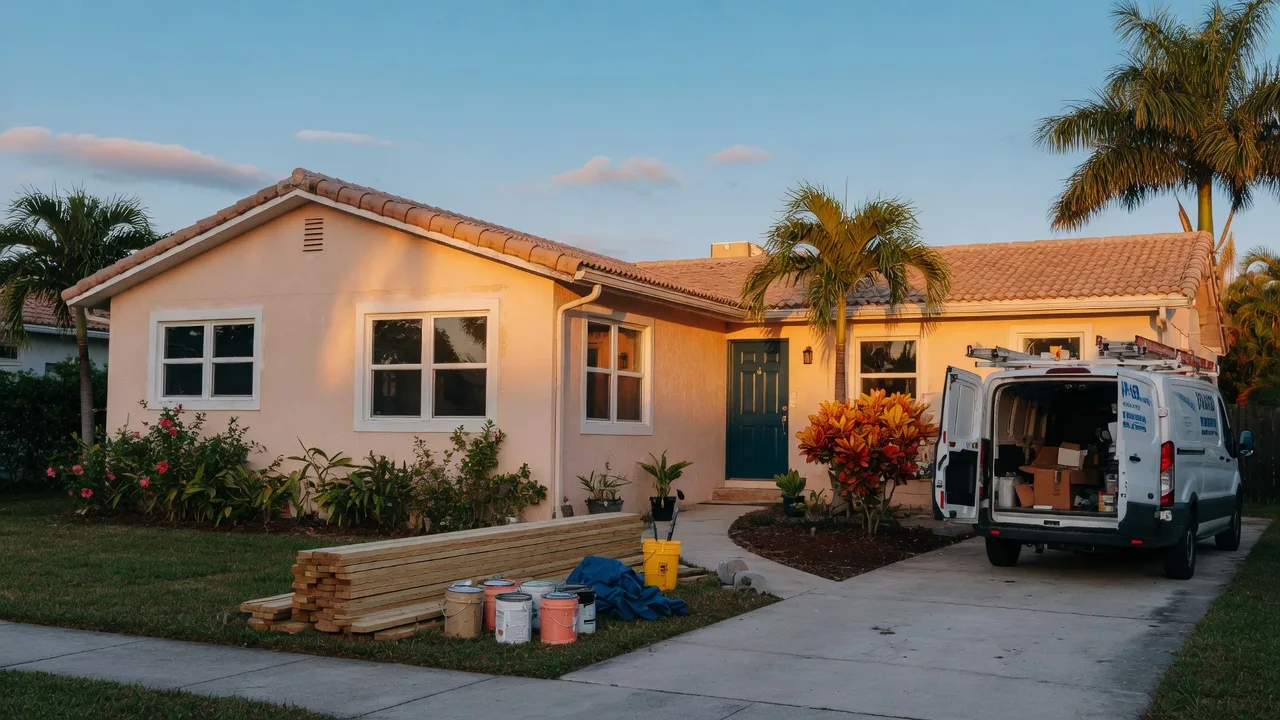
Renovating a home in South Florida is different from almost anywhere else. Between hurricane building codes, permitting rules, licensing requirements, and the way payments and liens actually work, the process can catch owners off guard. This guide walks through how renovations really work here, and what you should check before any contractor starts work, whether you are updating a condo, a townhouse, or a single-family home in Delray Beach, Boca Raton, Boynton Beach, or the surrounding areas.
The good news: the rules are not complicated once you know them, and most problems are completely avoidable. A few hours of checking before you sign anything can save you from the mistakes that fill contractor complaint files.
Why a Florida renovation is different
Everything in a Florida home is held to a higher standard because of storms. Roofs, windows, doors, and exterior walls follow Florida building code built around wind resistance. That matters in two practical ways: work that touches those systems almost always needs a permit, and the quality of that work affects your homeowners insurance premium. A properly permitted roof or impact-window installation can even earn you a wind-mitigation discount. Unpermitted work, by contrast, can create insurance headaches and resale problems later.
Humidity and heat also decide what your projects cost and how long they last. Exterior work fades and corrodes faster, mold is a real concern, and air conditioning and roof work are the most important systems in the house. If you are buying or selling, the condition of those systems shows up fast. Owners planning bigger projects should also read through the full owning a home in South Florida hub for the tax, insurance, and maintenance picture that surrounds any renovation budget.
Start with a realistic project and budget
Before you talk to a single contractor, write down what you actually want done. Sounds simple, but vagueness is where budgets die. A written scope of work, even a rough one, lets you compare bids fairly and keeps the contractor honest.
Plan a cushion on top of the quote. Most contractors and renovation guides recommend budgeting 10% to 20% extra for surprises, and in an older Florida home, surprises are the norm: rot behind tile, old wiring, plumbing that does not meet current code. That cushion is not pessimism, it is planning.
Also think about what the work is worth to the home, not just to you. Upgrading past what the neighborhood supports is how owners lose money on renovations. If resale value matters, our guide to improvements that actually add value when selling separates the projects that pay off from the ones that do not.
Check the license before anyone gives you a price
In Florida, anyone contracting to do work on your home should hold a license through the Department of Business and Professional Regulation (DBPR). You can verify it yourself in a couple of minutes at myfloridalicense.com using the "Verify a License" search. Look for the license type to match the work, the status to read "Current, Active", and the expiration date to be in the future.
Two kinds of contractor licenses exist in Florida, and the difference matters:
- State-certified: Passed the state exam and can work anywhere in Florida. Numbers start with a C plus a trade code, like CGC for certified general contractor or CRC for certified residential contractor.
- State-registered: Holds a local competency card from a specific city or county and can only work there. Numbers start with R. Make sure a registered contractor is licensed in the exact city or county where your home sits.
Beyond the license, ask for proof of general liability insurance and workers' compensation coverage. A licensed contractor is required to carry them, and your homeowner's policy is not meant to cover their crew. Then get three written bids for anything over a few thousand dollars, and check references on past jobs, ideally homes similar to yours.
Watch out for door-to-door and emergency-pressure sales
After a storm, unsolicited contractors show up fast. Florida law gives homeowners a specific protection: under Florida Statute 501.025, a home solicitation sale, a sale of goods or services over $25 made at your home, can be canceled until midnight of the third business day after you sign. The contractor must give you written notice of that right and a cancellation form, and any payment you made must be refunded if you cancel.
If someone offers a "same-day deal" or pressures you to sign on the porch, that is the exact situation the law is designed to protect you from. Legitimate contractors do not need you to decide in the driveway. Check the license, get the bid in writing, and take the three days if you need them. Emergency repairs are exempt from the cancellation window, but a real emergency means immediate life-safety work, not a new roof sold at your front door.
Permits and the Notice of Commencement
Most significant work needs a building permit from your city or county: structural changes, roofing, electrical, plumbing, impact windows and doors, HVAC replacement, and more. The contractor should pull the permit, and the permit number should be current and tied to your address before work begins. Your property appraiser's office and your insurance company both track permitted work, and a permit history that does not match the home can complicate a future sale or a claim.
Florida law also requires something many owners have never heard of: the Notice of Commencement. Before work starts on most residential projects, the owner records this document with the county and posts it at the job site. Its purpose is to protect you from paying twice. Florida requires the permit card itself to warn owners, in bold type, that failing to record a Notice of Commencement may result in paying twice for improvements to the property.
A general contractor usually handles the paperwork, but the responsibility is ultimately the owner's. If you hear "a permit is not needed for this," ask why, in writing. A licensed contractor who avoids permits is a red flag, and unpermitted work can cost you at insurance time and at resale.
Payment schedules and Florida lien law
How you pay is as important as who you hire. The standard protections are simple:
- Pay in milestones tied to completed work, not a large deposit upfront. Small deposits are normal on big projects; a demand for most of the money before work starts is not.
- Never pay everything upfront, and avoid cash. A paper trail protects both of you, and it is what the lien process runs on.
- Get lien releases before final payment. Ask for a release from the contractor and, where applicable, from subcontractors and suppliers who worked on your job. A signed affidavit of unpaid lienors closes the door on surprise claims.
Florida's construction lien law (Chapter 713) lets contractors, subcontractors, and material suppliers file a lien against your home if they are not paid, even if you already paid the general contractor. Subcontractors and suppliers who are not in direct contract with you must serve a written Notice to Owner within 45 days of starting work to keep their lien rights, and a claim of lien must be recorded within 90 days of the last work or delivery. The Notice of Commencement you recorded at the start is what protects you here, because it tells everyone on the job where the money is coming from. If any of this feels complicated, it is exactly why the closing step, lien releases in hand before the final check, matters so much.
The safety net: the Homeowners' Construction Recovery Fund
Florida runs a state-administered Homeowners' Construction Recovery Fund that can compensate homeowners who lose money through the misconduct of a licensed contractor, such as abandonment, financial mismanagement, or fraud. It is funded by fees licensed contractors pay, not by taxpayer money. It is a real protection, and one most owners have never heard of.
Know its limits so you are not surprised. The fund only covers work done under a signed written contract with a contractor who held a valid license at the time, and it is a last resort: you generally need a final court judgment or arbitration award against the contractor first, and the process can take a year or more. Recovery is capped, with the larger Division I contractor claims having a higher limit than subcontractor claims. Florida law requires residential construction contracts to include a written statement about the fund, so a contract that mentions it is a good sign, and a contract that skips it should raise questions.
The practical takeaway: the fund is a backstop, not a plan. The plan is verifying the license, pulling the permits, recording the Notice of Commencement, and keeping lien releases on file.
Financing the project
Most owners pay for renovations with savings, a home equity line of credit (HELOC), or a cash-out refinance, and each option has different costs and timelines. Which one fits depends on your equity, your income, and your plans for the home, so it is worth a real conversation with a lender before you commit to a big project. I can connect you with trusted lending professionals who know Florida construction and equity products; they will give you the actual numbers for your situation. For the basics of how mortgages and credit work, start with our financing and mortgage guide.
The bottom line
A successful Florida renovation comes down to five steps: define the scope, budget a 10% to 20% cushion, verify the license and insurance, pull the right permits and record the Notice of Commencement, and pay on milestones with lien releases in hand. None of it is glamorous, and all of it is doable. Owners who skip these steps are the ones who end up in disputes; owners who follow them get projects that are finished, permitted, and worth the money.
If you are planning work and want to know what it should be worth to your home before you spend, I am happy to run the numbers with you, no pressure. Send me a message or call 561-915-8590. And if you are also weighing the everyday costs that come after any renovation, our hidden costs of owning a home in Florida and South Florida maintenance guide cover what keeps a home running year after year.

Ryan Parker
Realtor · Coldwell Banker Realty · SL3571861
Ryan Parker is a South Florida real estate agent with Coldwell Banker Realty who helps buyers, sellers, and owners make confident decisions about homes in Delray Beach, Boca Raton, Boynton Beach, and the surrounding communities. He focuses on homeownership education and honest, practical guidance for everyday people.
Related articles
South Florida Home Maintenance
Real maintenance costs and a seasonal checklist.
Improvements That Add Value
Which projects pay off and which do not.
Owning a Home in South Florida
Taxes, insurance, HOA, and maintenance in one place.
Homeownership Insurance
Coverage, costs, and wind-mitigation discounts.
For neighborhood deep-dives and market insights, visit RyanParkerRealty.com.